
What Is Time and Price Theory?
ICT time and price theory is the idea that a trade needs two things to line up: where price is likely to react, and when it is likely to move. Miss either half and the setup weakens.
Most retail traders obsess over price alone. They mark a level, wait, and take the touch whenever it comes. Time and price theory adds a filter: the touch only counts inside a specific window.
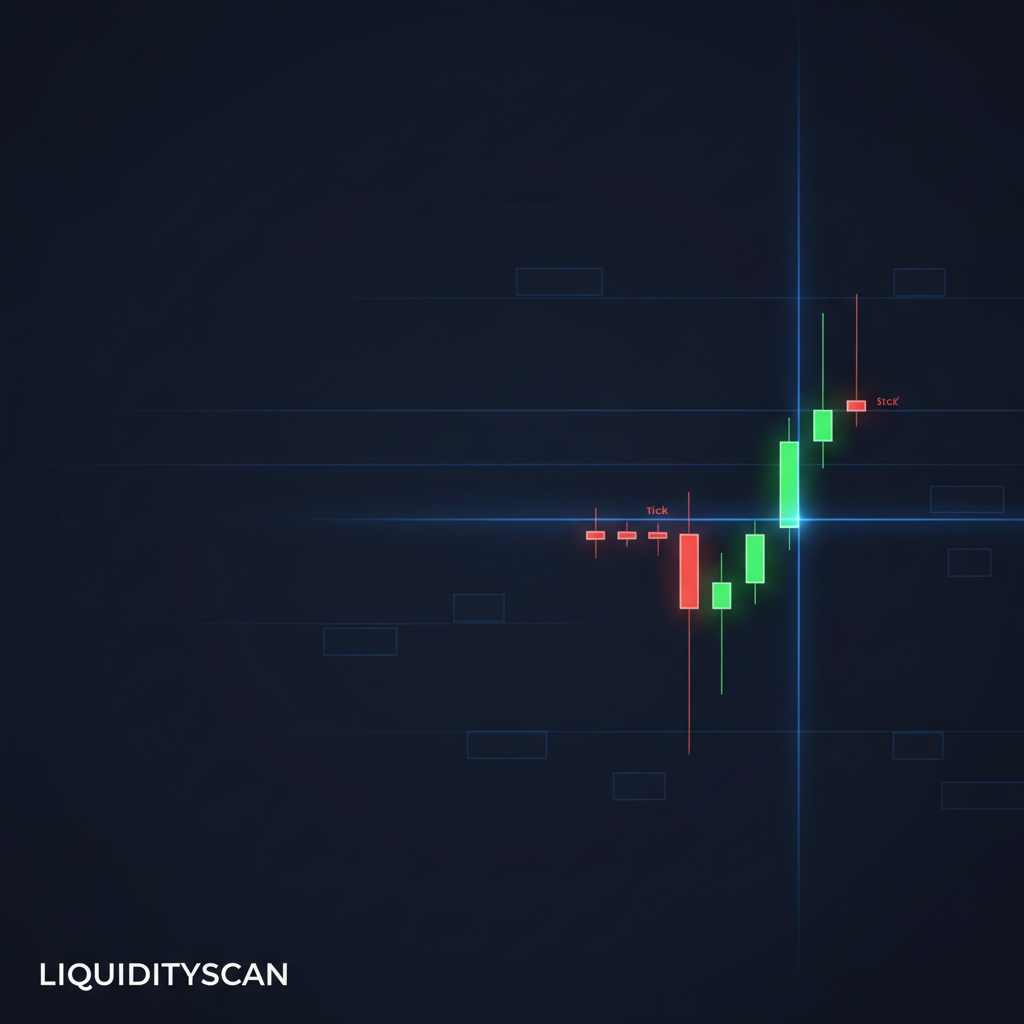
Think of it as a coordinate. Price gives you the vertical axis, time gives you the horizontal one. The best trades sit exactly where those two lines cross, and everything else is noise you can pass on.
The "Price" Half — Where Price Is Likely to Go
The price half asks a single question: where is the market drawn to next? In ICT, the answer lives in the PD array framework and in liquidity resting above and below obvious swings.
A PD array is a menu of levels the market tends to reach for, sorted by premium and discount. In a bullish leg you look to buy at discount; in a bearish leg you look to sell at premium. That bias comes from your higher timeframe read.
Liquidity is the fuel. Price hunts stops parked beyond old highs and lows, then reverses from a nearby array. I treat the level itself as the "where" and the resting liquidity as the reason price is likely to visit it.
I am not going to re-teach PD arrays here; the guide linked at the end walks through premium, discount and equilibrium in detail. For now, just hold the idea that price has a magnetic destination you can mark in advance.
The "Time" Half — When Price Is Likely to Move
Price levels are static, but the market only pays attention to them at certain hours. The time half narrows your day to the windows where real delivery happens.
Kill zones are the broad brackets around the London and New York opens where volatility and directional intent cluster. Session opens themselves often deliver the sharpest expansions of the day.
Inside those brackets sit macros, the tight windows where algorithmic delivery is most consistent. Kill zones tell you the neighbourhood; macros tell you the exact minutes to watch. Both are covered in depth in the linked guides, so I will not rebuild them here.
The practical takeaway is simple: outside these windows, even a perfect-looking level is far less trustworthy. Time filters out the dead hours where levels get chopped instead of respected.
Combining Time + Price for a Setup
Here is where the theory earns its name. You take your marked price level and you overlay your timing window, then you wait for both to arrive together.
My routine looks like this. First, higher timeframe bias sets direction. Second, I mark the PD array I expect price to reach. Third, I note the kill zone or macro when that reach is most likely. Fourth, I only act if price touches the level inside the window.
Say your bias is bullish and you have a discount array sitting just below price. If price drifts into it at 3am with no session behind it, you pass. If it sweeps into that same array during the New York open macro, that is your coordinate, and the setup is live.
This is the core of ICT time and price theory: a level plus a moment, not a level alone. Tools like LiquidityScan help me flag when both conditions converge so I am not staring at charts all day waiting.
Why Both Are Needed
A good level at the wrong time fails, and a good time at the wrong level is just gambling. The pairing exists because each half covers the other's blind spot.
Price without time gives you endless touches, many of which happen in low-liquidity hours where the level gets faded. You feel right about the location but the market has no reason to react yet.
Time without price gives you movement without a destination. You know the New York open is coming, but with no level to trade toward you are entering on hope. According to Investopedia, timing decisions add value only when paired with a defined analytical edge, which in this framework is your level.
Demand both and you naturally trade less. You skip the level that shows up too early and the window that arrives with nothing to aim at. Selectivity, not frequency, is the whole point.
Frequently Asked Questions
Is time or price more important in ICT?
Neither works alone. Price tells you where a reaction is likely and time tells you when it is likely to happen. The edge in ICT time and price theory comes only when both agree at the same moment.
What happens if my level is hit outside a kill zone?
Treat it as lower probability. A touch in a dead hour often gets faded because there is no session flow behind it. Many traders simply wait for the next window rather than force the entry.
Do I still need higher timeframe bias?
Yes. Bias decides whether you are buying discount or selling premium in the first place. Time and price theory refines your entry, but the higher timeframe read is what points you in the right direction.
Related query paths
Work through these to master each half before you combine them.
- PD Array Explained: A Trader's Guide to Premium & Discount — the price half, where your level comes from.
- ICT Kill Zones: A Pro Trader's Framework — the time half, the windows that matter.
- ICT Macro Times: The 20-Minute Windows — precise timing for the sharpest entries.
- The Ultimate ICT Market Structure Framework — reading price delivery to confirm your bias.
- Premium & Discount vs Support & Resistance (ICT)