
What Are NWOG and NDOG?
An opening gap is the empty price range between one session's close and the next session's open. When the market reopens away from where it stopped, that untraded space becomes a reference the market often revisits.
The New Week Opening Gap (NWOG) is the gap between Friday's close and Sunday's open. The New Day Opening Gap (NDOG) is the gap between the prior day's close and the new day's open at the New York midnight open.
Both are opening gaps, not Fair Value Gaps. A Fair Value Gap forms inside a fast three-candle move; an opening gap forms across a closure in trading. I treat them as separate tools that happen to rhyme.
How They Form
The NWOG is a weekend gap. Friday's closing price and Sunday's opening price rarely match, so a band of untraded price is left behind over the weekend. That band is your gap.
The NDOG forms nightly. Take the prior day's close, then the new day's open at midnight New York time. The distance between those two prices is the New Day Opening Gap.
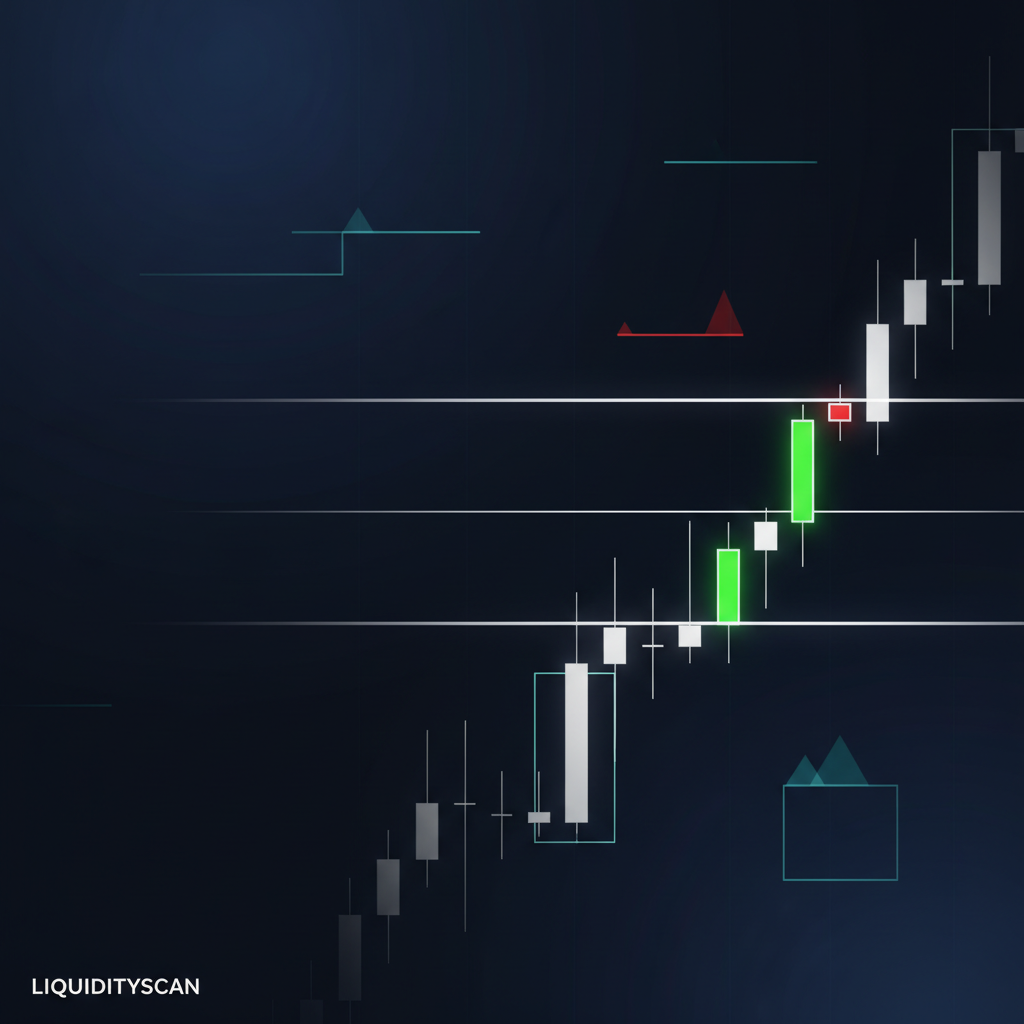
To mark either one, draw a line at the close and a line at the open. Then add a third line halfway between them. That middle line, the consequent encroachment, does most of the work.
Precision matters here. Use the actual last traded price of the closing session and the first price of the reopening session, not a rounded number your eye prefers. A slightly wrong level produces slightly wrong reactions, and over dozens of trades that drift adds up.
The CME trading calendar is worth checking, because holidays shift when a session opens and can widen or shrink the gap you expect. I confirm the exact open before I trust any level I have drawn.
Why Opening Gaps Act as Support/Resistance
These gaps matter because they are unfilled institutional reference points. No trading happened in that band, so the market has unfinished business there and tends to return to reprice it.
When price trades back into a prior opening gap, the gap frequently acts as support or resistance. An unfilled NWOG can hold for the entire week; an NDOG often governs the next session's rotation.
The midpoint, or consequent encroachment, is the most reactive part of the gap. Price often respects that 50% line rather than the exact edges, which is why I plot it first.
Think about liquidity too. The far edges of an opening gap sit where stops and pending orders cluster, so a sweep of an edge followed by a snap back to the midpoint is a common sequence. That is the market engineering liquidity, then repricing toward its reference.
How to Trade the NWOG/NDOG
I do not chase the gap. I mark it and wait for price to come back on a retest, then let the reaction confirm before I commit.
My checklist is simple. Draw the high, low, and midpoint of the gap. When price retests the consequent encroachment, watch for a rejection wick or a shift in delivery, then plan an entry with a stop beyond the far edge of the gap.
Context decides the direction. A retest into an unfilled NWOG that aligns with the weekly bias is stronger than one fighting it. On LiquidityScan I keep these levels drawn ahead of the session so a retest never surprises me.
Timing helps too. Reactions at these gaps land harder inside the day's active windows than in dead hours, so I pair the level with a session read rather than trading it in isolation.
NWOG vs NDOG — When Each Matters
The NWOG is a higher-timeframe magnet. Because it only prints once a week, an unfilled weekly gap can act as support or resistance for days and frame the whole weekly rotation.
The NDOG is your intraday reference. It resets every midnight and helps you read where the day opened relative to the prior close, which shapes the session's early bias.
I lean on the NWOG for weekly context and the NDOG for daily execution. When a fresh NDOG stacks near an older, unfilled NWOG, that confluence is the level I respect most.
Frequently Asked Questions
Is a New Week Opening Gap the same as a Fair Value Gap?
No. A Fair Value Gap forms inside a fast three-candle move during regular trading. An NWOG forms across the weekend closure between Friday's close and Sunday's open. They are different tools, though both mark untraded price.
What is the consequent encroachment of an opening gap?
It is the exact midpoint of the gap, the 50% level between the close and the open. Price often reacts to this line more reliably than to the gap's outer edges, so many ICT traders treat it as the key reference.
Do opening gaps always get filled?
Not always. Many are filled quickly, but an unfilled NWOG can hold for a full week and keep acting as support or resistance. The value is in the reference level, not in guaranteeing a fill.
Related query paths
Opening gaps work best when you pair the level with timing and higher-timeframe context.
- ICT Macro Times: The 20-Minute Windows — time your gap reactions to the intraday windows where they land hardest.
- ICT Weekly Profiles Explained — see why where the week opens relative to the NWOG matters for bias.
- ICT Kill Zones Complete Guide — trade the sessions that surround these opening gaps.
- Is ICT Trading Real? A Skeptic's Guide to Smart Money — Place NWOG and NDOG within the broader ICT liquidity and market-structure framework.
- The Professional ICT Trading Routine: A Daily Playbook — Use NWOG and NDOG within a structured daily ICT trading process.