
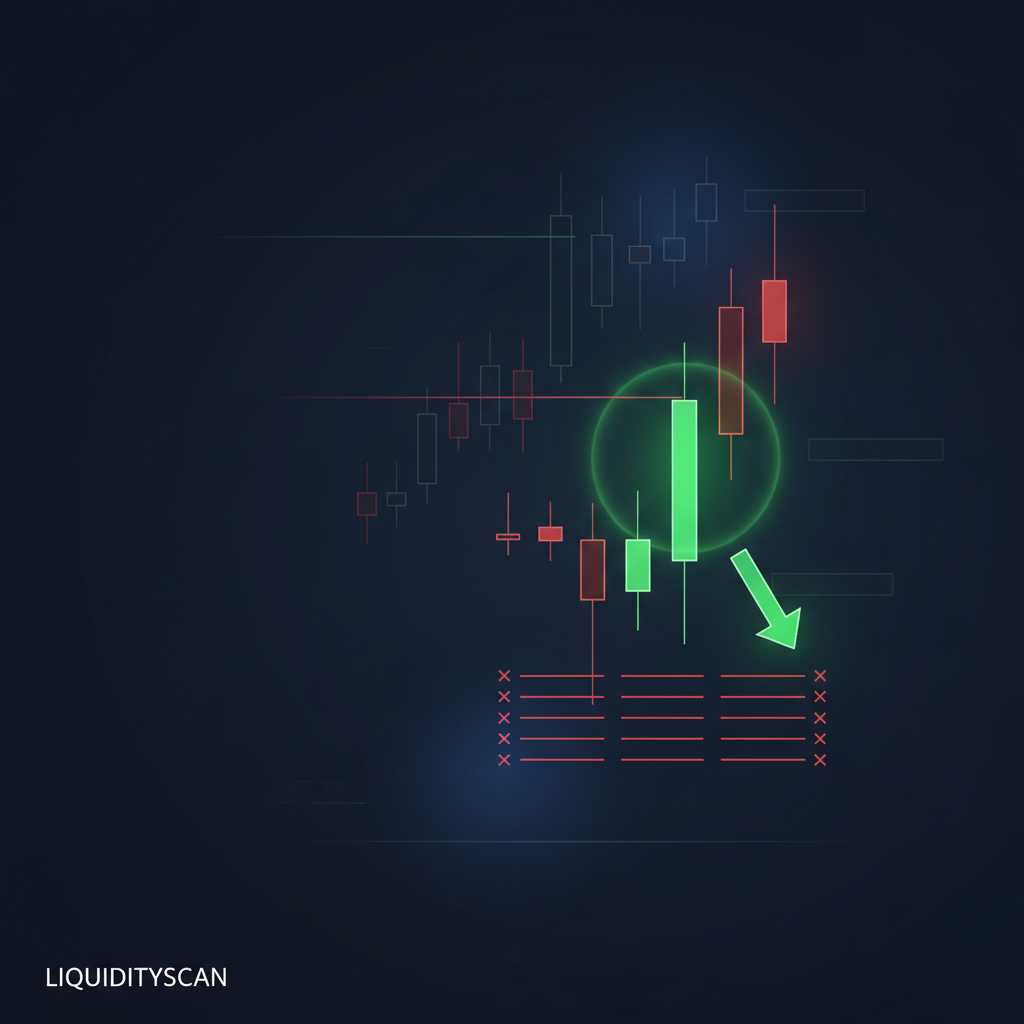
Is Stop-Loss Hunting Real?
Yes, stop-loss hunting is real, but not as a personal conspiracy. Price gravitates toward areas where stop orders cluster because large participants need that resting liquidity to fill their size. Your stop is not targeted; it sits with thousands of others at obvious levels.
The distinction matters because it changes what you do about it. If you believe a desk is watching your individual order, you feel helpless. Once you understand that stop hunting is a mechanical byproduct of where liquidity pools, it becomes something you can position around, and even trade with. The rest of this guide is about doing exactly that.
Why Stop-Loss Hunting Feels Personal
The reason a stop hunt feels targeted is that the outcome is so specific: you place a stop at a sensible spot, price spikes through it by a few ticks, then reverses and runs to your target without you. It looks surgical. It feels like the market waited for you.
It did not wait for you. It waited for the pool. When you place a "safe" stop just under the swing low, you place it in the exact spot where every other trader who read the same chart placed theirs. Retail education teaches the same rules to everyone, so everyone's protective orders end up stacked in the same narrow band.
That stack of resting orders is liquidity. Below a swing low sit clustered sell-stops (from longs) and resting sell-side interest; above a swing high sit buy-stops. When a large buyer needs to fill, the single richest source of counterparty orders is precisely that cluster. Price is drawn there not to spite you, but because that is where the fuel is.
The Mechanics: Resting Stops Are Liquidity
A stop-loss is a market order waiting to trigger. A sell-stop below the low becomes a market sell when touched; a buy-stop above the high becomes a market buy. To institutions, a dense band of these is a pool of guaranteed counterparties, exactly what you need to fill a large position without moving price against yourself.
This is the core of the ICT Liquidity Sweep idea: price is engineered toward obvious highs and lows so resting orders can be absorbed, then delivery reverses toward the real objective.
The concept of a Draw on Liquidity describes this magnetic pull: unfilled pools act as targets. A Stop Hunt is just the retail-facing name for the wick that runs one of those pools.
Where do stops cluster most predictably?
- Under obvious swing lows and above swing highs, the textbook stop placement.
- At equal highs and equal lows. Two or more highs at the same price (Equal Highs / Equal Lows) advertise a resting pool like a neon sign.
- At round numbers, the 1.1000 in EURUSD or 60,000 in BTCUSDT, where humans naturally anchor stops and targets.
- Along trendlines, where diagonal support gathers a diagonal band of stops.
Notice the pattern: stop hunting concentrates wherever placement is obvious. The more a level looks like the "correct" place to hide a stop, the more crowded it is, and the more attractive it becomes as a liquidity target.
How to Avoid Getting Swept: Five Practical Rules
You cannot stop the market from running liquidity. You can stop being part of the pool it runs. Everything below is about moving your stop out of the crowd and, better, turning the sweep into your entry signal.
1. Place your stop beyond the pool, not inside it
The single biggest fix. Do not put your stop just under the swing low, put it beyond where a sweep of that low would reasonably reach. If the obvious low is at 59,900, a hunt might wick to 59,750 and reverse.
A stop at 59,880 dies; a stop below 59,700, beneath the likely sweep extreme or the Order Block that produced the move, survives the flush and stays in the trade.
2. Use structural stops, not arbitrary pip or percent stops
A stop at "20 pips" or "1%" is placed for account math, not for what invalidates the idea. It lands at a random price with no relation to structure, often right inside a liquidity band.
A structural stop sits where the reason for the trade is actually wrong, below the origin of displacement, beyond the order block, past the swept extreme. Let structure define the level; let position size adapt to it, not the reverse.
3. Enter after the sweep, not before
Instead of getting caught by the hunt, wait for it. Let price run the obvious low, then look for a shift, a reclaim of the level, a Change of Character, a displacement candle back through the range. Enter the reversal after liquidity is taken.
The event that would have stopped you out becomes your confirmation. This is the mindset flip that separates repeat victims from traders who profit from the same move.
4. Avoid round numbers and equal highs/lows
Treat 60,000, 1.2000, and paired equal highs/lows as liquidity targets, not as protection. Never rest a stop a few ticks beyond an obvious double top or a psychological round figure, that is the most-hunted real estate on the chart. If your invalidation truly sits near one, place the stop meaningfully past it so the sweep completes before you are removed.
5. Size for a wider structural stop
A wider, correct stop with smaller size beats a tight, obvious stop with larger size. The tight stop guarantees you sit in the pool; the wider stop keeps the same dollar risk while surviving the flush.
Fix your risk per trade first (say a set fraction of the account), then work backward to position size from the structural stop distance. Sound Risk Management makes wide stops affordable.
Turn the Stop Hunt Into Your Signal
Stop hunts are information. A clean sweep of an obvious low that immediately reverses tells you two things: that pool of liquidity has been consumed, and someone with size wanted to fill at that price. That is often where the real move begins, not ends.
So flip the frame. When you see price wick through an equal low and snap back with displacement, do not mourn the traders who got stopped, read it as a footprint. The sweep marks where liquidity was resting and signals the likely direction of the next leg, away from the pool it just cleared.
Trading with the sweep, entering the reversal it creates, converts the mechanic that hurt you into a repeatable edge. Automated tools like LiquidityScan exist to flag these sweep-and-reverse events across many pairs so you are watching the reaction instead of getting caught in the wick.
When a "Hunt" Is Actually You Being Wrong
Not every stop-out is a hunt, and the honest trader admits it. Sometimes the idea simply failed. Two tests separate a genuine liquidity sweep from a bad trade:
- Did price reverse quickly and decisively? A true sweep takes the level, then rejects hard and reclaims the range within a few candles. If price took your stop and kept going in that direction, you were not hunted, you were wrong about direction.
- Was your stop at a structural invalidation or an arbitrary one? If the level that broke genuinely invalidated your setup, the trade is dead, correctly. Calling that a "hunt" is just refusing to accept a losing thesis.
Blaming stop-loss hunting for every loss is a trap. It hides real mistakes, wrong bias, bad entry, no confirmation, behind a story about manipulation. Use the sweep framework to place better stops, not to excuse bad trades. The same self-honesty prevents the behavioral errors that quietly feed the hunt:
- Revenge-moving your stop. Widening a stop mid-trade because price is approaching it converts a defined risk into an open-ended one. Set the structural stop before entry and leave it.
- Trading with no stop at all. "They can't hunt what isn't there" is how accounts blow up. No stop is not protection from sweeps, it is unlimited risk on the one move that does not come back.
- Blaming the market for every loss. If you never ask whether the thesis was wrong, you never fix the real leak. Manipulation is real; so is being wrong, and only one of those is in your control.
- Copying textbook stop placement. The reason the obvious stop gets hunted is that it is obvious. If your placement matches the crowd's, expect the crowd's outcome. Ask on every trade whether your stop is where you think safety is, or where everyone else thinks it is.
Worked Example: Two Stops, One Sweep
Take a BTCUSDT long. Price has formed a clear swing low at 60,000, a round number and an obvious level, then rallied and pulled back toward it. Two traders go long near 60,300 with the same idea.
- Trader A places a stop at 59,950, just under the low, the "safe" textbook spot. Price wicks down to 59,780, sweeping the round-number pool and taking every stop stacked beneath 60,000, including A's. Then it reverses and runs to 62,000. A is flat, watching, convinced the market hunted them. It did, because A parked inside the pool.
- Trader B reads 60,000 as a liquidity target, not support. B waits for the sweep, sees price spike to 59,780 and reclaim 60,000 with a strong displacement candle, and enters the reversal with a stop below 59,700, beyond the sweep extreme and the order block. Same idea, same chart. B survives the flush and rides the move A got shaken out of.
Nothing about the market changed between the two traders. Only stop placement and entry timing did. That is the whole game: same setup, opposite outcomes, decided entirely by whether you sat in the liquidity or beyond it.
Trader A did nothing technically wrong by retail rules, which is exactly the point: following the obvious rules put the stop in the obvious pool, and the obvious pool is what gets swept.
Stop-loss hunting is real, but it is mechanical, not personal, and that is good news. Once you place structural stops beyond the pool, enter after the sweep, and treat obvious levels as liquidity rather than protection, the hunt stops removing you from good trades and starts pointing you toward them.
Frequently Asked Questions
Do brokers hunt your stop loss?
Reputable regulated brokers do not individually target your stop, they route orders and profit on spread and commission. What you experience is real market liquidity mechanics: price runs the crowded pools where many stops cluster. On some low-quality or unregulated venues, poor execution can worsen it, but the primary driver is where liquidity rests, not your specific order.
Where should I actually place my stop loss to avoid a sweep?
Place it beyond the liquidity pool, not just inside the obvious level. Put it past the likely sweep extreme, below the order block that produced the move, or beyond the structural point that truly invalidates your idea, then size the position so that wider distance still fits your fixed risk per trade.
How do I know if I was stop hunted or just wrong?
Check the reaction. A genuine sweep takes the level, reverses quickly, and reclaims the range within a few candles. If price took your stop and kept traveling in the same direction, you were wrong about bias, not hunted. If your stop sat at a real structural invalidation that broke, the trade correctly failed.
Can you turn stop hunting into a trading strategy?
Yes. Instead of getting caught, wait for price to sweep an obvious high or low, then enter the reversal once it reclaims the level with displacement. The sweep marks where liquidity rested and often the start of the next leg. Trading with the sweep converts the mechanic that used to stop you out into a confirmation signal.
Related query paths
Follow the liquidity mechanics behind stop hunting, from the core definition to the reversal setups you can actually trade.
- What Is a Liquidity Sweep? — the base definition of the move that runs your stops.
- Liquidity Sweep Explained: The ICT Stop Hunt — the ICT mechanics of the hunt in full depth.
- What Is a Liquidity Pool in ICT? — why stops cluster and where the pools form.
- Equal Highs & Equal Lows (EQH/EQL): Engineered Liquidity — the most-hunted stop levels on any chart.
- Why Price Reverses After a Liquidity Sweep — how the hunt becomes the reversal you can enter.
- Order Block Stop Loss & Take Profit Rules — structural stop placement beyond the pool.
- FOMO in Trading: Why You Chase Entries and How to Beat It — a related angle on fomo trading.