
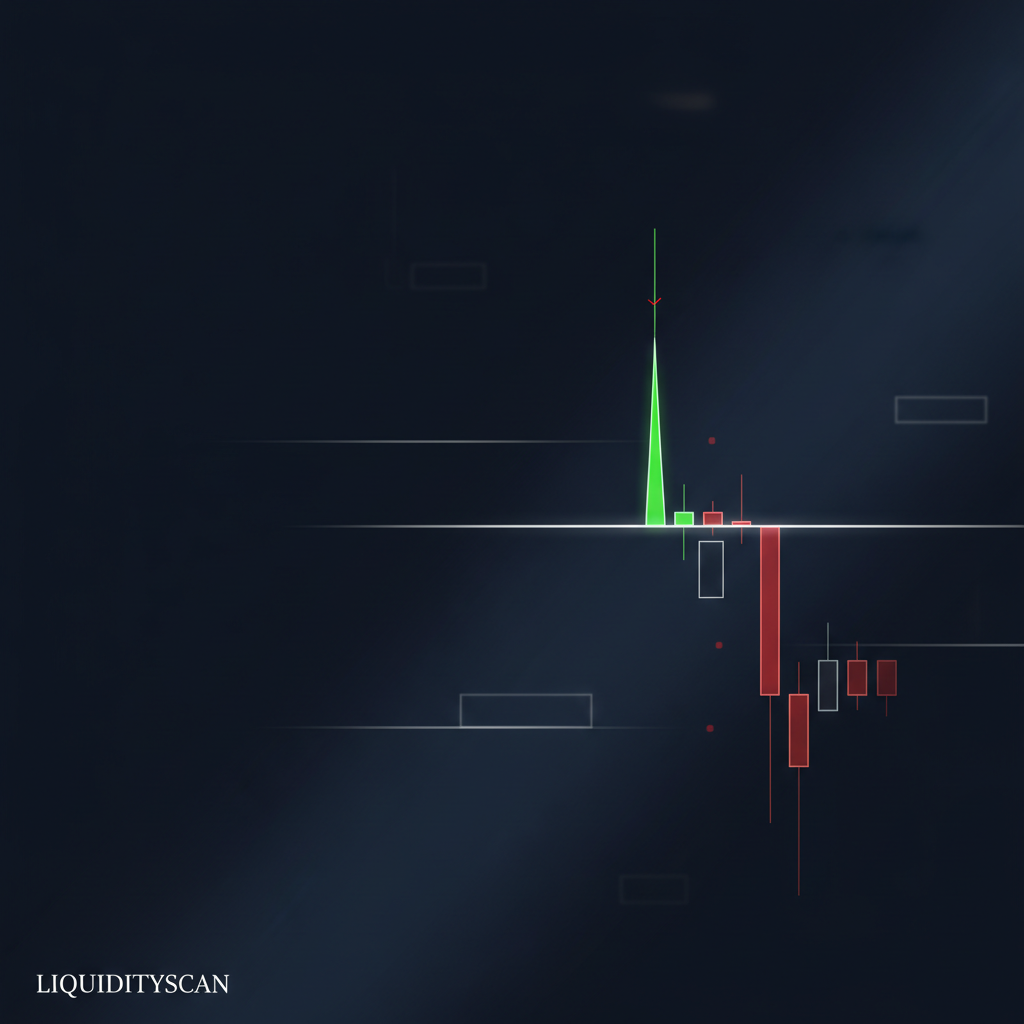
What is a Liquidity Sweep in Trading?
A liquidity sweep, also known as a stop hunt, is a specific price action pattern where price moves sharply to run a key swing high or low, triggering a pool of stop-loss orders before aggressively reversing direction. In Inner Circle Trader (ICT) and Smart Money Concepts (SMC) frameworks, it is one of the clearest footprints large participants leave behind.
The logic is simple. Retail traders cluster their stops in predictable places, and those stop orders are resting liquidity. When enough of them sit above a high or below a low, that level becomes a magnet. Price is drawn to it not by accident but because that is where the fuel for the next move is stored.
The Mechanics: Why Do Liquidity Sweeps Occur?
Institutions cannot fill large positions at a single price without moving the market against themselves. They need counterparties. A sweep engineers that liquidity by pushing price into a stop cluster, so the resulting flood of market orders provides the fills a large player needs to enter or exit efficiently.
Buy-Side Liquidity (BSL) Sweeps
Buy-Side Liquidity sits above old highs, where short sellers place protective stops and breakout buyers place entries. A BSL sweep drives price up through that high, fills those orders, and then reverses lower. The raid up is the setup for the move down.
Sell-Side Liquidity (SSL) Sweeps
Sell-Side Liquidity rests below old lows, holding the stops of long positions and breakout sellers. An SSL sweep spikes below the low, absorbs that liquidity, and reverses higher. On EUR/USD you often see this at the previous day's low during the London session.
How to Identify a Liquidity Sweep on a Chart
Key Characteristics of a High-Probability Sweep
A valid sweep has three ingredients: an obvious liquidity level (previous day, week, or session high or low), a sharp wick or spike that runs it, and an immediate rejection. If price runs the level and then keeps going, it was not a sweep. It was a breakout.
Chart Example: A BSL Sweep in the London Session
Picture the NASDAQ 100 opening into the London Kill Zone. Price rallies into the prior day's high, wicks two ticks above it, and traps breakout buyers. This early trap is often the Judas Swing, a false move designed to mislead before the real direction reveals itself.
The Role of Displacement and Market Structure Shift (MSS)
The confirmation is what happens next. A genuine sweep is followed by displacement, a high-momentum move away from the level that creates a Fair Value Gap (FVG) and produces a Market Structure Shift (MSS), sometimes called a Change of Character (CHoCH). That displacement is the proof that smart money committed to the reversal.
Liquidity Sweep vs. Liquidity Grab: A Critical Distinction
The terms are used loosely, but the intent differs. A liquidity sweep implies a major reversal, confirmed by displacement and a structural shift. A liquidity grab can be a minor probe that collects orders without meaningful follow-through, often inside a range. The test is always the same: did displacement and an MSS follow? If not, treat it as noise.
Developing a Liquidity Sweep Trading Strategy
A basic model waits for price to sweep a known level, then looks for displacement that breaks short-term structure. The entry is on the retracement into the resulting FVG or order block, with the stop placed just beyond the swept wick. The target is the opposing liquidity pool, for example the low that sits on the other side of the range.
Discipline matters more than the pattern. Trading every wick is how accounts bleed out. The edge comes from waiting for the sweep to occur at a level that aligns with your higher timeframe bias.
Can an Indicator Detect Liquidity Sweeps?
A liquidity sweep is fundamentally a price action concept, so no lagging indicator draws it perfectly. What tools can do is highlight resting liquidity and confirm whether real institutional order flow accompanies the move. Platforms like LiquidityScan surface these levels and flag when a sweep is backed by genuine flow rather than a thin, low-conviction spike.
Frequently Asked Questions
Is a liquidity sweep the same as a stop hunt?
Yes. Stop hunt is the informal name for the same event: price runs a cluster of stop-loss orders at a key level before reversing. Investopedia documents stop-hunting as a recognized market behavior.
How do I know a sweep is valid and not a breakout?
Wait for displacement. A valid sweep reverses immediately with a strong move that creates a Fair Value Gap and shifts market structure. A breakout keeps trending in the direction of the run.
Where do liquidity sweeps happen most often?
At previous day, week, and month highs and lows, and at session highs and lows, especially during the London and New York Kill Zones when volatility is highest.
Related query paths
To go deeper on where liquidity forms and how to trade the reversal, continue here:
- Internal vs External Liquidity: An SMC Trader's Guide — understand exactly where the pools a sweep targets are built.
- London vs NY Liquidity Sweeps: Which Session Drives the Real Move? — see how session timing changes sweep behavior.
- The Institutional SMC Stop Loss and Take Profit Strategy — place stops where they survive the hunt.
- ICT Trading: The Definitive Guide — fit sweeps into the full methodology.
- What Is the Judas Swing in ICT Trading?