
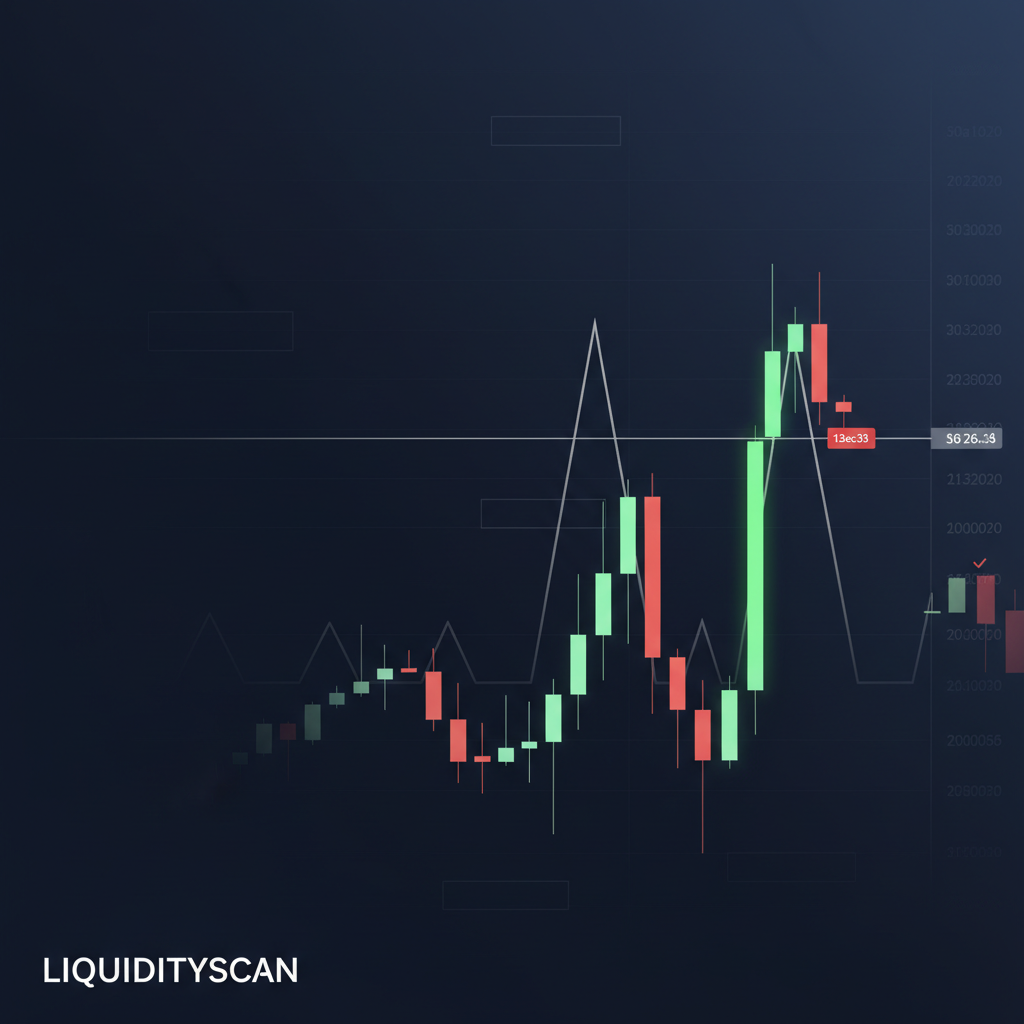
What Are Equal Highs and Equal Lows?
Equal highs (EQH) are two or more swing highs that top out at roughly the same price. Equal lows (EQL) are two or more swing lows resting at the same floor.
They don't need to match to the tick. Traders read them as "equal" when the wicks or bodies line up closely enough that the level looks obvious on a chart.
In Smart Money Concepts, EQH/EQL are a specific flavour of external liquidity. The equal level itself is a marker — it tells you where a pool of orders is likely parked.
Why They Form: Obvious Resting Liquidity
Price rarely leaves a clean level by accident. When two highs match, breakout traders place buy stops just above, and anyone short from that level tucks a stop-loss above it too.
That stacks buy-side liquidity in a tight band over the equal highs. Below equal lows, the mirror happens: sell stops and long stop-losses cluster, forming sell-side liquidity.
The more obvious the level, the more orders collect there. A textbook double top is visible to every retail trader, which is exactly why it becomes a magnet — a draw on liquidity that price gravitates toward.
This is why I stopped seeing EQH/EQL as barriers. They are fuel. The market moves to where the stops are, and equal levels advertise that location in plain sight.
How to Trade EQH/EQL: Target, Then Reversal
I use equal levels in two stages. First as a draw-on-liquidity target: if I'm already positioned, an untouched EQH above is a logical place to expect price to travel.
Second, and more powerfully, as a reversal signal. When price finally runs the equal highs, it usually does so with a sharp wick — a liquidity sweep that grabs the resting stops and then closes back below.
My entry sequence is simple. I wait for the sweep, then I watch a lower timeframe for a shift in structure confirming the reversal. Only then do I enter, with my stop above the swept high.
The sweep itself is the trigger, not the break. A close above equal highs that holds is a genuine breakout; a wick that reclaims is the trap. I cover the full mechanic in the liquidity sweep guide linked below.
Relative Equal Highs/Lows and Confluence
Not every equal level lines up perfectly. Relative equal highs (or lows) are levels that are close but not exact — one high slightly above the other, still reading as a shared zone.
These are just as valid as targets. What matters is whether other traders would see the same level and defend it with stops.
Confluence sharpens the read. An EQH sitting under a higher-timeframe supply zone, or at the far edge of an inducement leg, is a stronger draw than an equal level floating in isolation.
On LiquidityScan I flag pairs where price is coiling into an obvious equal high with a fair value gap left behind — that combination tends to resolve as a clean sweep-and-reverse.
EQH/EQL vs Double Top/Double Bottom
A double top and equal highs describe the same shape on the chart. The difference is interpretation.
The classic double top is taught as a bearish reversal pattern — you sell the second peak expecting a drop. SMC reads the identical structure as engineered liquidity that price is likely to sweep before it decides direction.
In practice this means an SMC trader is patient where a pattern trader is early. The double-top seller shorts the level; the EQH trader waits for the level to be taken, then trades the reaction.
Frequently Asked Questions
How exact do equal highs and equal lows need to be?
They don't need to be tick-perfect. If two swing points line up closely enough that the level looks obvious on the chart, other traders will place stops there, and that is what makes the level tradable.
Are equal highs bullish or bearish?
Neither on their own. Equal highs mark buy-side liquidity above price. They often get swept and reject lower, but a strong close above them can also fuel a genuine breakout. Wait for the reaction before assigning bias.
What is the difference between EQH/EQL and inducement?
Inducement is a smaller pool of liquidity used to trap traders into an early entry before the real move. Equal highs and lows are often the larger external target beyond that trap. See the inducement guide for how to tell them apart.
Related query paths
Work outward from equal levels to the mechanics that make them tradable.
- Internal vs external liquidity: an SMC trader's guide — where these EQH/EQL pools actually sit in the structure.
- Liquidity sweep explained: the ICT stop hunt — what happens the moment price reaches an equal level.
- Inducement vs liquidity sweep: a trader's guide to SMC setups — telling a trap from the real move at your level.