▸ CATEGORY · ICT CONCEPTS
ICT Concepts
Articles filed under "ICT Concepts" — deep analysis from LiquidityScan Research.

Is the Market Really Algorithmic? The ICT Delivery Thesis Examined
Modern markets are demonstrably algorithmic in execution. Whether a single interbank algorithm books liquidity in advance and delivers price to it, as ICT's IPDA thesis claims, is a different question — here is what the evidence supports, and what it doesn't.
 Hayk Muradian·
·11 min
Hayk Muradian·
·11 min

What Is Smart Money in Trading? Institutions vs Retail Order Flow
Smart money is the professional capital that moves markets — bank dealing desks, hedge funds, CTAs, prop firms, and market makers. Its edge is structural, not mystical: flow visibility, execution infrastructure, cheap funding, and size so large it cannot trade without leaving footprints.
Hayk Muradian·
·11 min

The Market Maker Model (MMXM): Buy and Sell Models Explained
The Market Maker Model (MMXM) is ICT's blueprint for a complete delivery cycle: an engineered move one way so smart money can build positions against it, then the real move back through the same zones. Here is the buy model (MMBM) and sell model (MMSM), leg by leg.
Hayk Muradian·
·12 min

How to Learn ICT Trading: A Foundations-First Roadmap
ICT's material is a web of interlocking concepts, not a course with a syllabus. This roadmap imposes the missing sequence: five ordered phases, time expectations for each, what to skip early, and how to know when you have actually learned something versus merely watched it.
Hayk Muradian·
·12 min
Every ICT Concept Explained: The Complete List
Every core ICT concept in one place: 40+ terms across liquidity, market structure, PD arrays, time-based tools, entry models, and bias — each defined in two or three sentences with the reason it matters on a live chart.
Hayk Muradian·
·15 min
Is ICT Trading Legit? Separating Method From Hype
Yes and no — ICT is legit as a framework, because stop clustering and liquidity sweeps are documented market behavior, but it is not a guaranteed system and its interbank-algorithm narrative is unproven. Here is the evidence on both sides, without the hype.
Hayk Muradian·
·10 min

ICT vs SMC vs Classic Price Action: What's Actually Different
ICT, SMC, and classic price action mark similar levels but disagree on why price moves: an algorithm delivering price to liquidity on schedule, institutional flow without the clock, or crowd psychology at remembered levels. That disagreement changes entries, stops, and trade selection.
Hayk Muradian·
·13 min
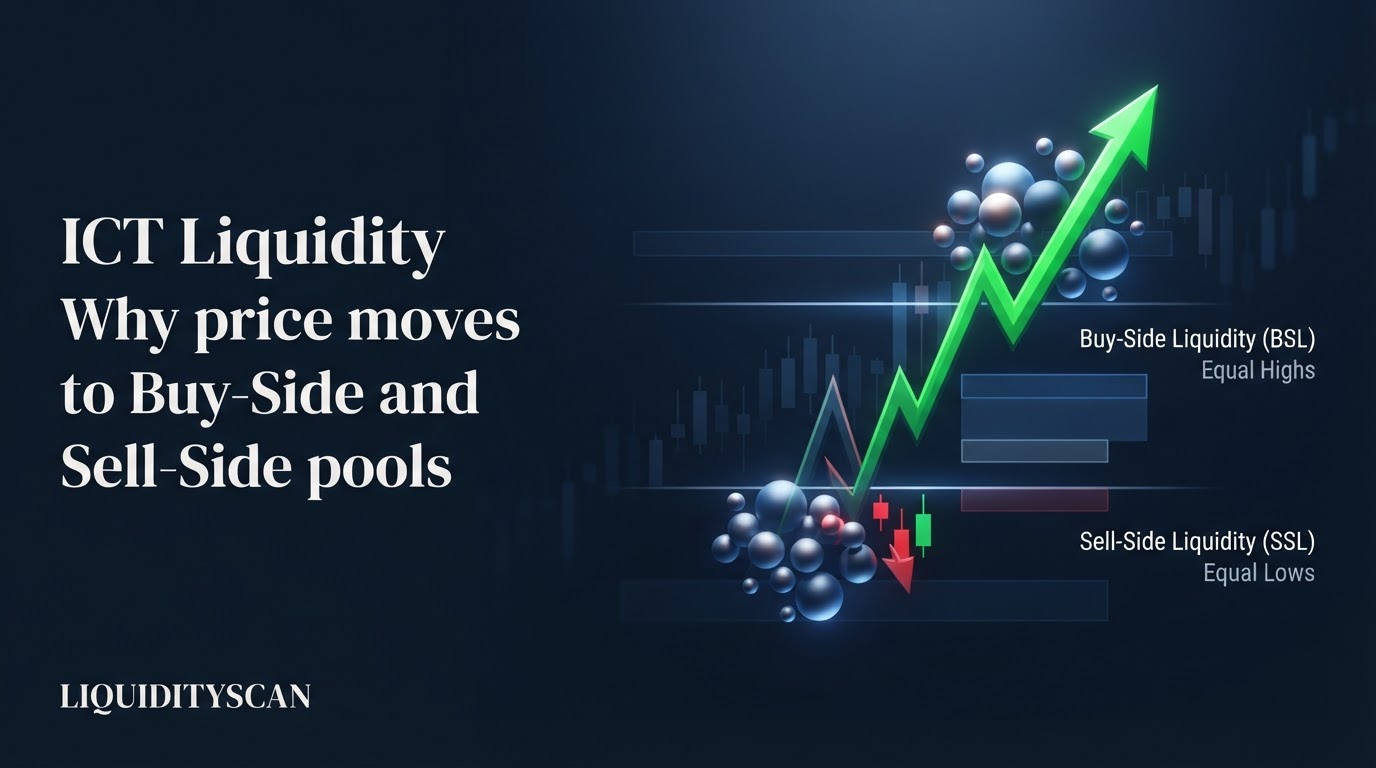
Liquidity in ICT: Why Price Moves to Buy-Side and Sell-Side Pools
In ICT, liquidity is not volume — it is the mass of resting stop and pending orders pooled above equal highs and below equal lows. Institutions need those orders as counterparties, which is why price is repeatedly drawn to the pools, sweeps them, and reverses.
Hayk Muradian·
·11 min

Fair Value Gap vs Imbalance vs Liquidity Void: Clearing the Confusion
A fair value gap is a specific three-candle construct, an imbalance is the umbrella term for any one-sided price delivery, and a liquidity void is a multi-candle vacuum that often contains several FVGs. Most traders use all three interchangeably — and it costs them precision at entry.
Hayk Muradian·
·11 min

What Is the Judas Swing in ICT Trading?
The Judas Swing is the false session-open move that traps breakout traders, sweeps their stops, then reverses into the real trend for the day.
Hayk Muradian·
·5 min
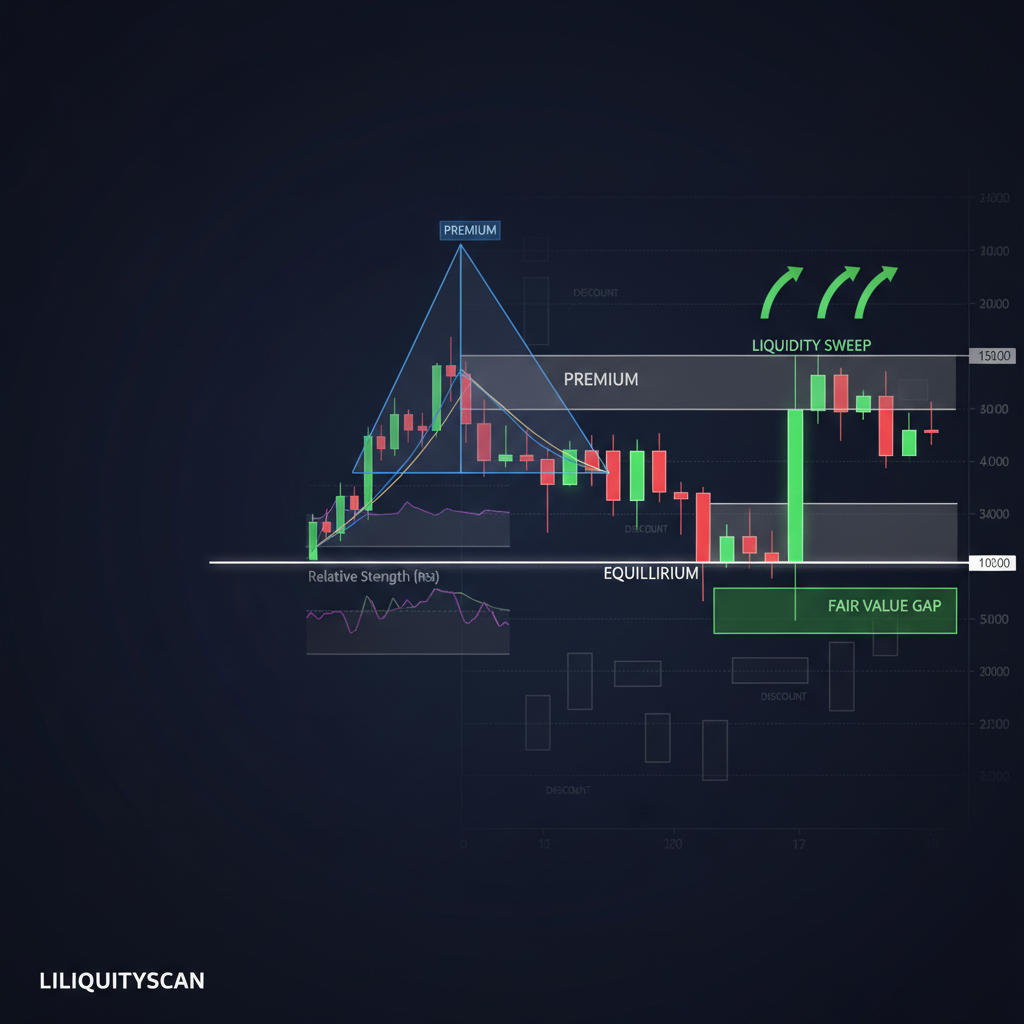
ICT vs Technical Analysis: Which Actually Works?
ICT and traditional technical analysis read the same charts but ask different questions. One tracks patterns; the other tracks why price moves.
Hayk Muradian·
·5 min
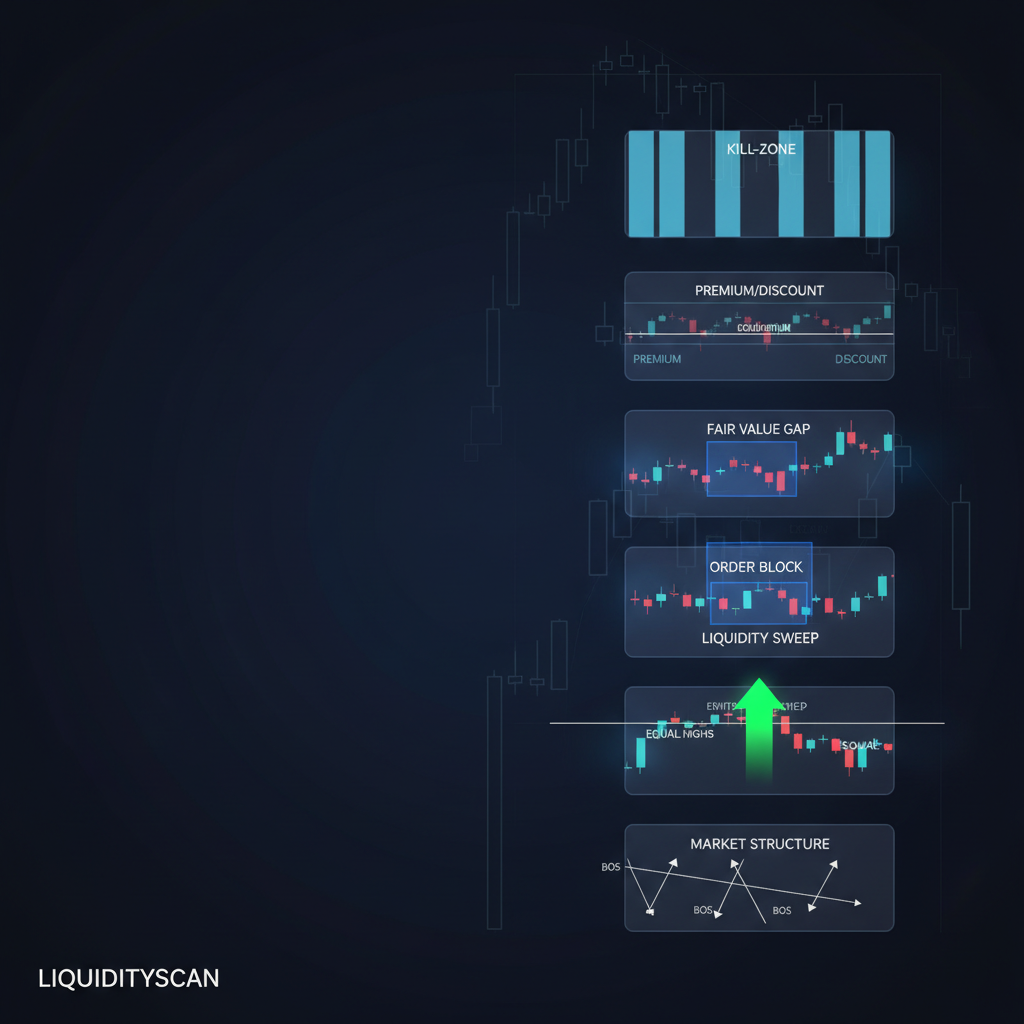
ICT Books & Learning Resources: The Real Path
ICT was taught through free video mentorships, not books. Here's the concept order that actually builds skill, and how to study it.
Hayk Muradian·
·6 min
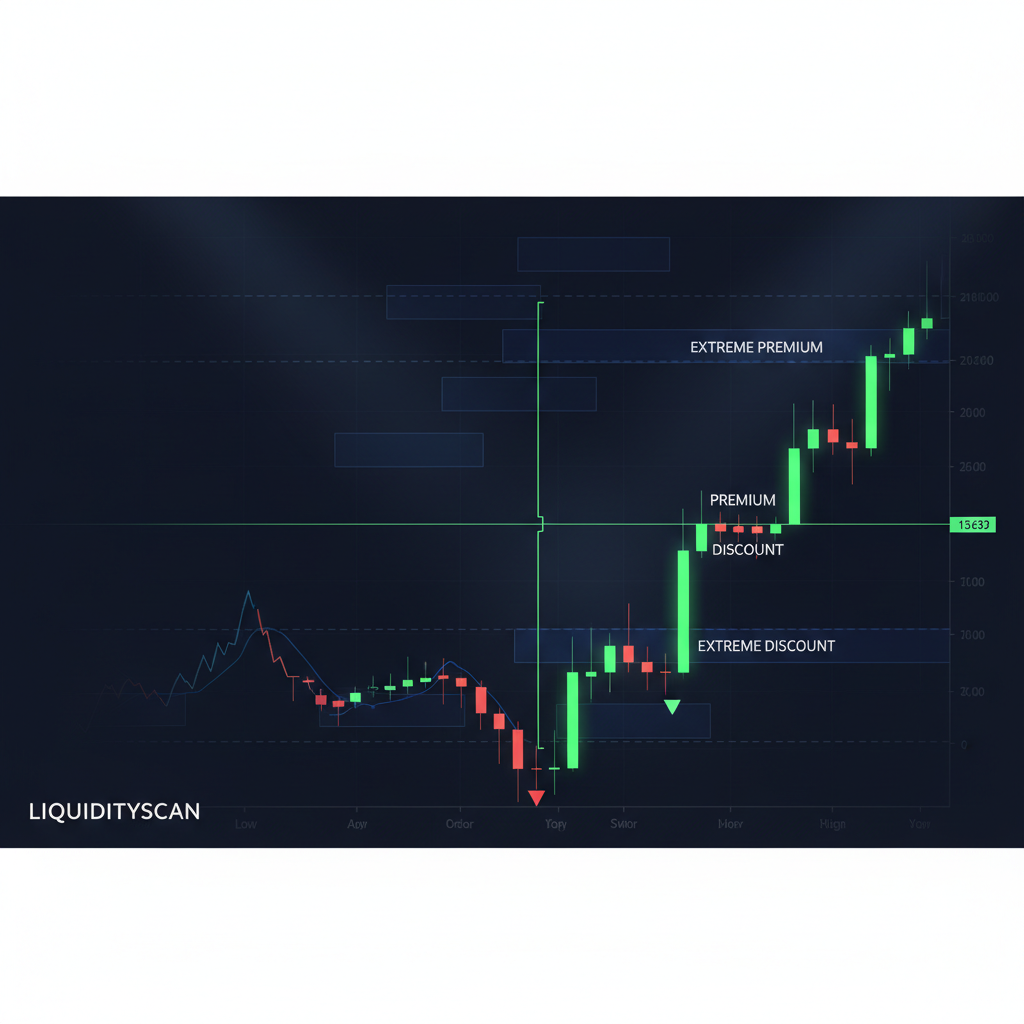
What Are the 4 Trading Zones? ICT Dealing Range
The four ICT trading zones split any dealing range into premium, discount, equilibrium, and the two extremes that frame your best entries.
Hayk Muradian·
·4 min
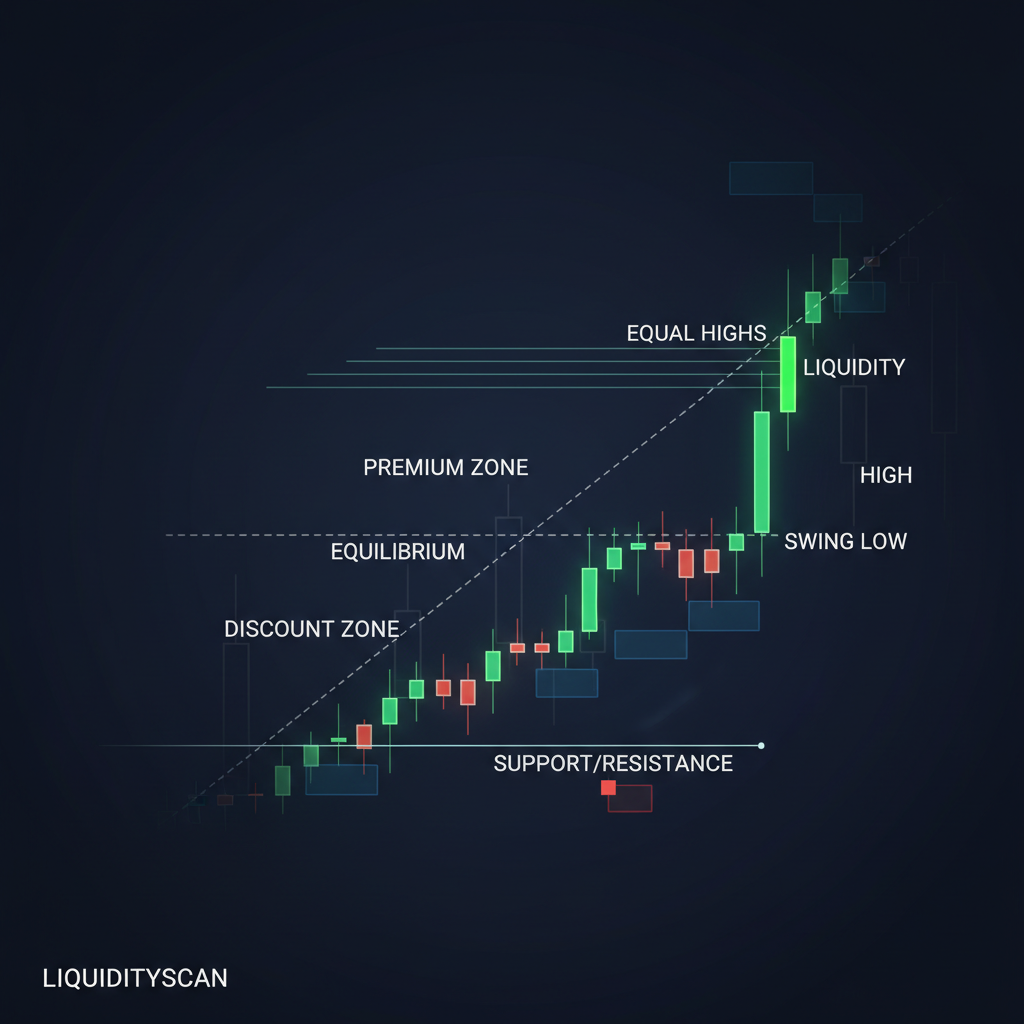
Premium & Discount vs Support & Resistance (ICT)
Support and resistance is horizontal memory. Premium and discount is a valuation model tied to the dealing range and the algorithm behind it.
Hayk Muradian·
·5 min

Evolution of ICT Concepts: A Timeline of Key Models
ICT didn't arrive fully formed. It grew from loose liquidity theory into mechanical entry models — and each step solved a real problem.
Hayk Muradian·
·6 min
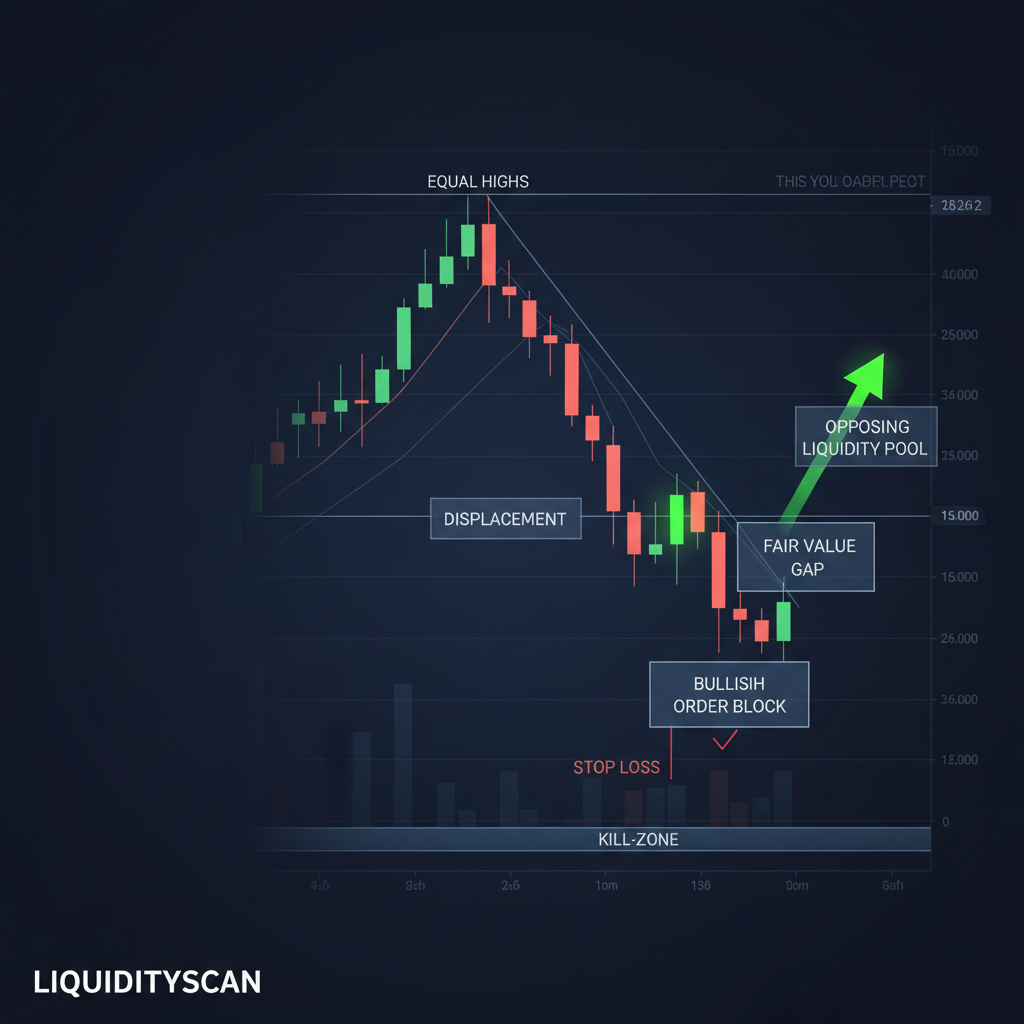
The ICT Trading Strategy, Explained Without the Hype
ICT isn't a single setup. It's a repeatable method for reading where institutions push price next — bias, liquidity, arrays, time, entry.
Hayk Muradian·
·5 min
ICT Kill Zones: Definition & Liquidity Mechanics
ICT kill zones are the daily time windows where institutional order flow concentrates. Here's what they are and why they produce sweeps.
Hayk Muradian·
·4 min
Not trading advice. LiquidityScan publishes educational content for informational purposes only. Trading involves substantial risk of loss.