
Should You Trade ICT During News?
Most of the time, the honest answer is no. High-impact releases are the single most hostile environment for retail entries, and the instinct to "catch the move" is exactly what gets punished.
ICT news trading flips the usual mindset. You are not trying to predict a data print or front-run a headline. You are waiting for the event to do its damage, then reading what the market reveals about intent.
If you cannot stay flat through the first violent minutes, you should not be at the screen during the release. Standing aside is a valid, often superior, decision.
Why News Events Engineer Liquidity
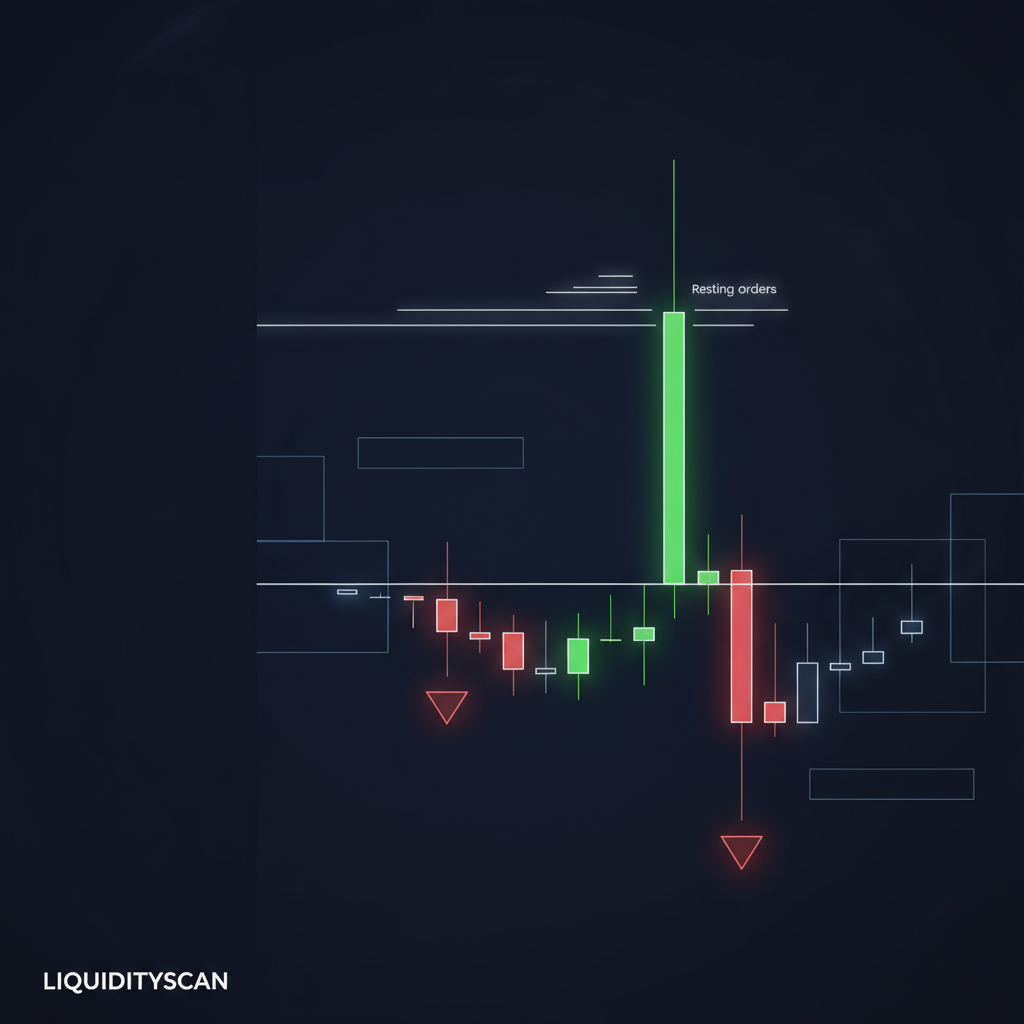
A scheduled release concentrates orders. Traders park stops above obvious highs and below obvious lows, and breakout traders queue entries at the same levels. That resting liquidity is fuel.
When the number drops, price often spikes hard in one direction, trips those stops, then snaps back and trips the opposite side too. The first move is frequently a stop run, not the real move.
This is the same mechanism behind any liquidity sweep, just amplified. The event supplies both the trigger and the two-sided pool of orders to hunt. I treat the initial spike as bait until structure proves otherwise.
High-Impact Events to Respect
Not every calendar item matters. A handful move price with enough force to engineer clean liquidity, and those are the ones worth watching.
Non-farm payrolls (NFP) is the headline US labor report, released monthly and known for whippy, two-sided reactions before any trend emerges. The FOMC rate decision and press conference can reprice everything in seconds, and the follow-through often arrives during the Q&A, not the statement. CPI, the key inflation gauge, drives sharp repricing across currencies, indices and crypto.
Keep an economic calendar open and know the exact release time. According to Investopedia, the NFP report is among the most closely watched economic indicators, which is precisely why it engineers such reliable stop runs.
The ICT Approach — Wait for the Sweep, Then Trade the Reversal With Structure
The method is patient by design. You let the release fire, watch it sweep an obvious high or low, and only then look for confirmation that the sweep failed.
That confirmation is a market structure shift: price displaces back through a recent swing point with intent, ideally leaving a strong displacement candle behind. The sweep grabs the liquidity; the displacement tells you the reversal is real.
Your entry is on the return, not the spike. Wait for price to pull back into the imbalance left by that displacement, then execute with a stop beyond the swept extreme. Timing overlaps matter here, so releases landing inside a kill zone tend to deliver the cleanest structure.
At LiquidityScan I built the scanner to flag these sweeps and shifts as they form, because reacting to structure beats guessing the number every time. If no clean shift appears, there is no trade.
Risk Management Around News
News volatility breaks the assumptions your risk model relies on. Spreads widen, fills slip, and the stop you set may execute far worse than the price on screen.
Reduce size or stand aside. If you normally risk a fixed percentage, cut it around a major release because your effective risk is unknown until the dust settles. A wider structural stop plus smaller size keeps the math honest.
Never place a tight stop directly inside the spike zone; it will get taken and slipped. Let the sweep complete, let structure form, and accept that skipping a release costs you nothing while a bad fill can cost you a week.
Frequently Asked Questions
Should I enter during the news spike?
No. The first spike is usually a stop run designed to trap breakout traders. Wait for price to sweep liquidity, then look for a market structure shift before considering an entry on the pullback.
Which news events matter most for ICT news trading?
NFP, FOMC rate decisions and CPI are the highest-impact scheduled releases. They concentrate the most resting liquidity, which makes their sweeps and reversals the most readable.
Why reduce position size around news?
Spreads widen and slippage spikes during releases, so your real risk is larger than your stop implies. Smaller size, or standing aside entirely, protects you from fills that land far from your intended level.
Related query paths
News amplifies mechanics you should already understand before trading it, so build the foundation first.
- Liquidity Sweep Explained — see exactly what a release does to resting stops.
- ICT Kill Zones Guide — timing context for when a news reversal is cleanest.
- Using the COT Report for Weekly Bias — pair a fundamentals-informed bias with your reaction.
- ICT Risk Management Framework — size correctly for news-level volatility.
- ICT vs Traditional Technical Analysis: A Trader's Guide
- Going Full-Time With ICT Trading: An Honest Roadmap
- The Professional ICT Trading Routine: A Daily Playbook
- What Is the ICT Trading Strategy? A Methodology Guide