
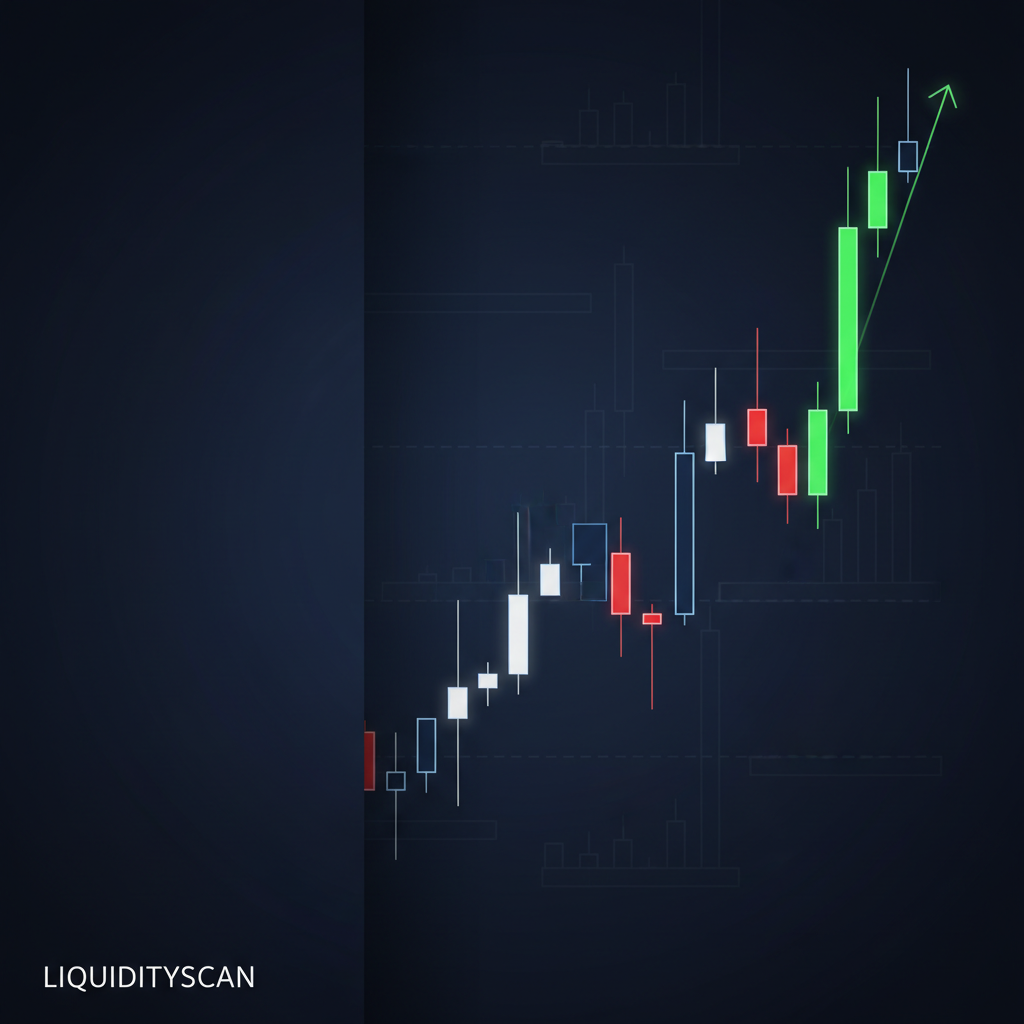
What Is a Propulsion Block?
A propulsion block is a fresh order block that price respects to continue an existing move rather than reverse from it. Instead of turning at the zone, price uses it as a launch pad.
The concept sits inside the order block family. If you need the base mechanics of how an order block forms and prints, review that concept first — I cover only the continuation behaviour here.
The defining trait is direction. A propulsion block sits in the direction of the prevailing trend and adds fuel to it, which is why traders treat it as a continuation signal instead of a reversal warning.
How a Propulsion Block Forms
Price makes a strong move with displacement, leaving a fresh order block behind. Rather than reversing, price pulls back into that block, taps it, and pushes off again in the original direction.
The block acts as mitigation for the earlier move: unfilled orders get filled on the retest, and the trend resumes. When price stacks on top of the block and refuses to close back through it, propulsion is confirmed.
Displacement matters. A weak, overlapping candle sequence into the block is a warning sign; a decisive, wide-range break away from it tells me the block held and the trend is intact.
The cleanest versions form after a break of structure in the trend direction, so the block is genuinely fresh and unmitigated when price returns to it.
Bullish vs Bearish Propulsion Block
Bullish Propulsion Block
In an uptrend, price rallies, pulls back into a fresh bullish order block, respects it, and continues higher. The block should hold as support, with wicks tapping in but bodies closing above it.
I want to see buyers defend the zone quickly. A slow grind that closes candles below the block warns that continuation may be failing.
Bearish Propulsion Block
In a downtrend, price sells off, retraces into a fresh bearish order block, respects it as resistance, and drops again. Bodies should close below the block while wicks probe into it.
The logic mirrors classic support and resistance behaviour, where a prior level flips into a springboard for the dominant side. You can read more on that framing at Investopedia's support and resistance overview.
How to Trade a Propulsion Block
My entry is the retest. I mark the fresh order block in the trend direction, then wait for price to pull back into it and show a reaction — a rejection wick or a displacement candle away from the zone.
The stop sits on the far side of the block. For a bullish setup, I place it below the block's low; for a bearish setup, above the block's high. If price closes fully through, the continuation thesis is invalidated.
For targets, I aim at the next liquidity pool or structural high or low in the trend direction. On LiquidityScan I map those pools before entry so my risk-to-reward is defined, not improvised.
Confluence sharpens the setup: a propulsion block that aligns with a higher-timeframe trend and a clean displacement leg beats an isolated one on a lower timeframe every time.
Propulsion Block vs Order Block vs Breaker
All three come from the same institutional order-flow logic, but they play different roles. An order block is the base zone. A propulsion block is an order block used specifically for continuation.
A breaker block is the reversal cousin: it forms when a failed order block flips and price trades back through it, marking a change in direction rather than a continuation of it.
In short, propulsion keeps the trend going; a breaker fights it. Knowing which one you are looking at decides whether you trade with the move or against it. I link the full breakdowns of each below.
Frequently Asked Questions
Is a propulsion block just a regular order block?
It is a specific use of one. Any fresh order block that price respects to continue a trend — rather than reverse from — is acting as a propulsion block. The context and direction define it.
How is a propulsion block different from a breaker block?
A propulsion block supports continuation in the trend direction, while a breaker block signals a reversal after a prior order block fails and price trades through it. One extends the move; the other flips it.
What confirms a propulsion block is valid?
Look for a fresh, unmitigated block in the trend direction, displacement into and away from it, and candle bodies that respect the zone rather than closing fully through it.
Related query paths
Start with the base concept, then work outward to validation and the reversal cousin.
- What Is an Order Block — the base concept a propulsion block is built on.
- Order Blocks: An Institutional SMC Framework — order blocks in depth before you specialise.
- The Core Order Block Validation Rule — confirm a block is fresh and valid before you trade it.
- Breaker Block Explained — the reversal cousin, for when the trend flips instead of continues.
- ICT Prop Firm Strategy: How to Pass the Challenge
- What Is the ICT Trading Strategy? A Methodology Guide
- rejection block in ICT — Compare this reversal setup with the propulsion block’s continuation logic.