▸ CATEGORY · CORE CONCEPTS
Core Concepts
Articles filed under "Core Concepts" — deep analysis from LiquidityScan Research.
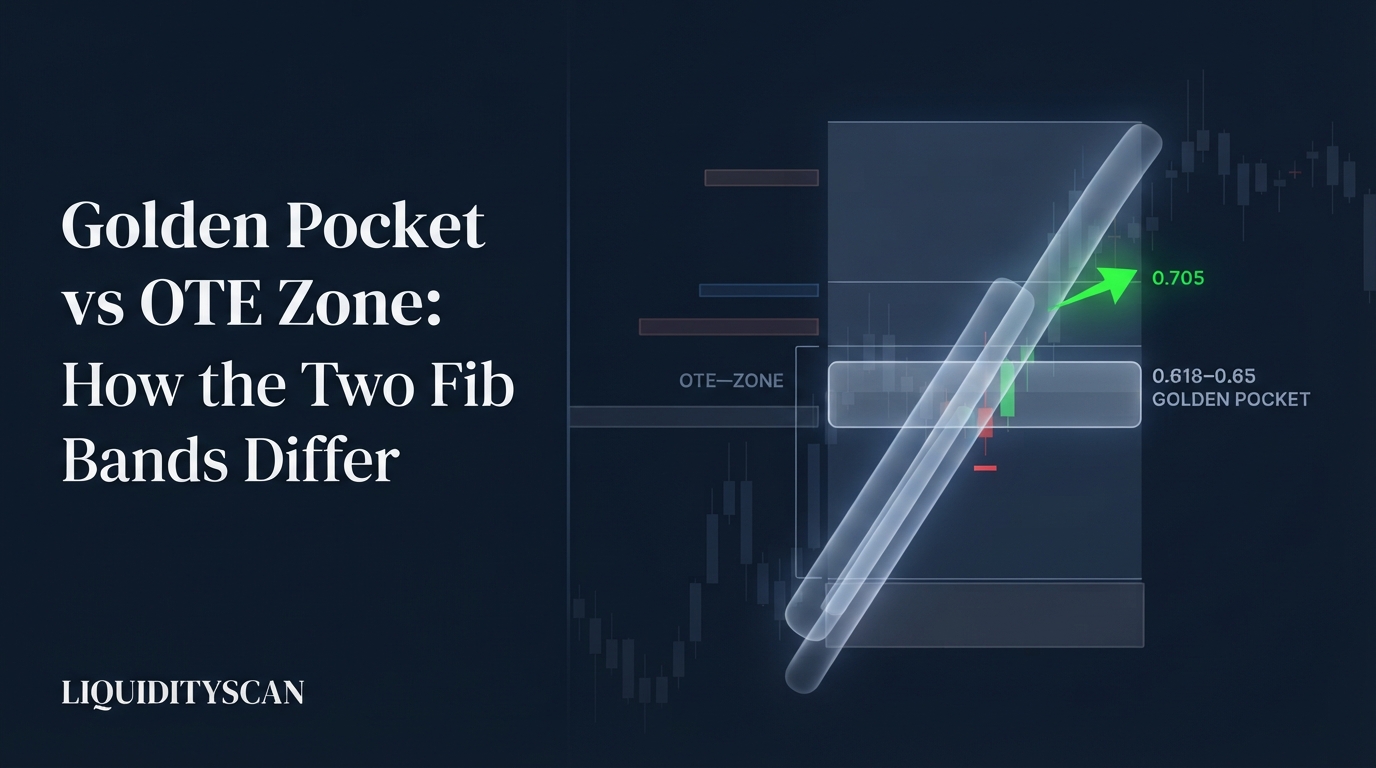
Golden Pocket vs OTE Zone: How the Two Fib Bands Differ
The golden pocket is the crowd's 0.618–0.65 retracement band; ICT's OTE runs 0.62–0.79 with a 0.705 sweet spot. They overlap at 0.62–0.65 — but one is crowd confluence and the other a proxy for deep discount, and that changes entries, stops, and which pullbacks you survive.
 Hayk Muradian·
·11 min
Hayk Muradian·
·11 min

Does the OTE Strategy Actually Work? A Data-Driven Win-Rate Look
Does OTE work? As a raw Fibonacci touch, no — but as a discount-entry framework with tight invalidation the arithmetic is favorable (a 40% win rate at 3R is profitable), and the edge lives in the filters: trend, liquidity, displacement, and time, not the 62–79% ratio itself.
Hayk Muradian·
·11 min
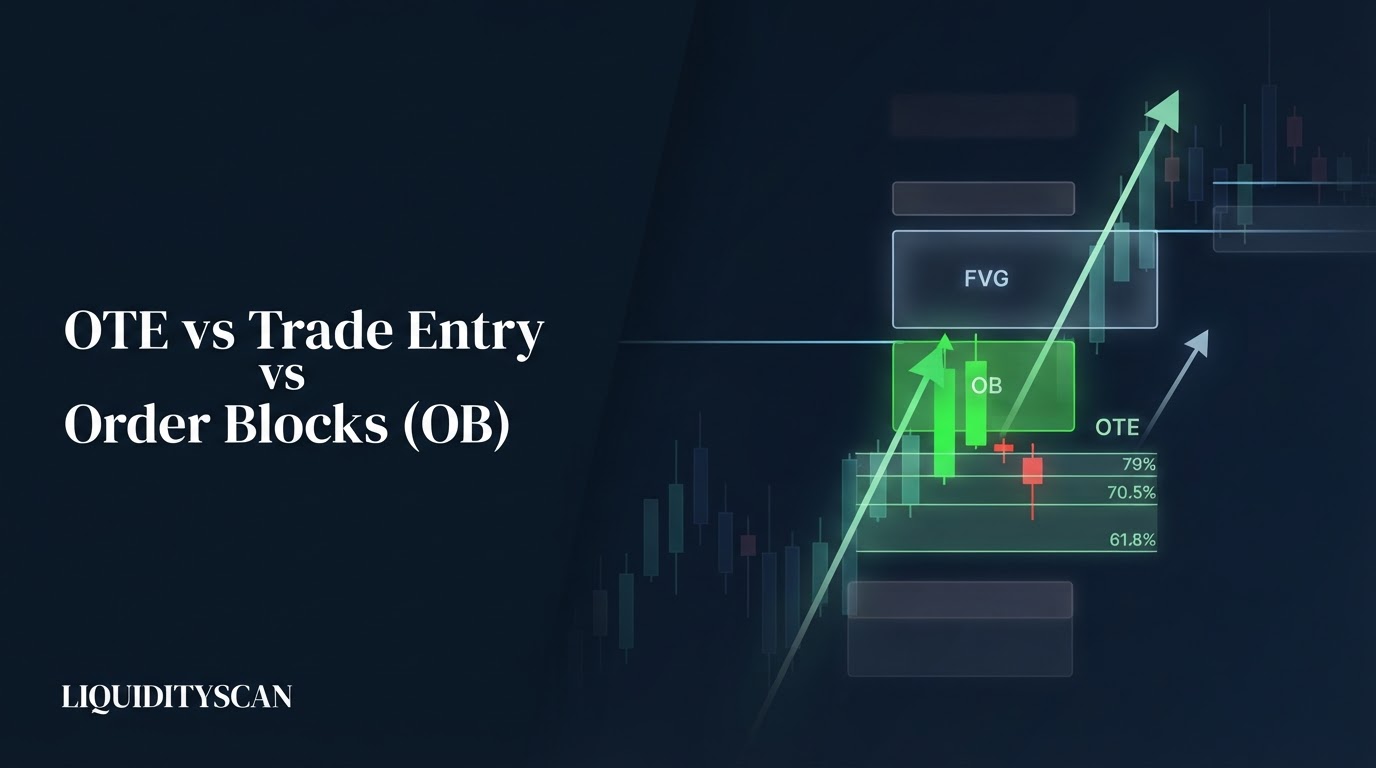
OTE vs Order Block: Which Entry Gives the Better Fill?
OTE and the order block answer the same question — where do I join the leg? — from opposite directions. OTE is a fib-defined retracement band; the order block is a candle zone left by displacement. Here is how their fills, stops, and R:R actually compare.
Hayk Muradian·
·11 min

Equilibrium in ICT: The 50% Level That Splits Premium From Discount
Equilibrium in ICT is the 50% level of the current dealing range — the fair-value midpoint that separates premium from discount. Institutions accumulate longs below it and distribute above it, which makes equilibrium the single most important filter in the ICT model.
Hayk Muradian·
·11 min
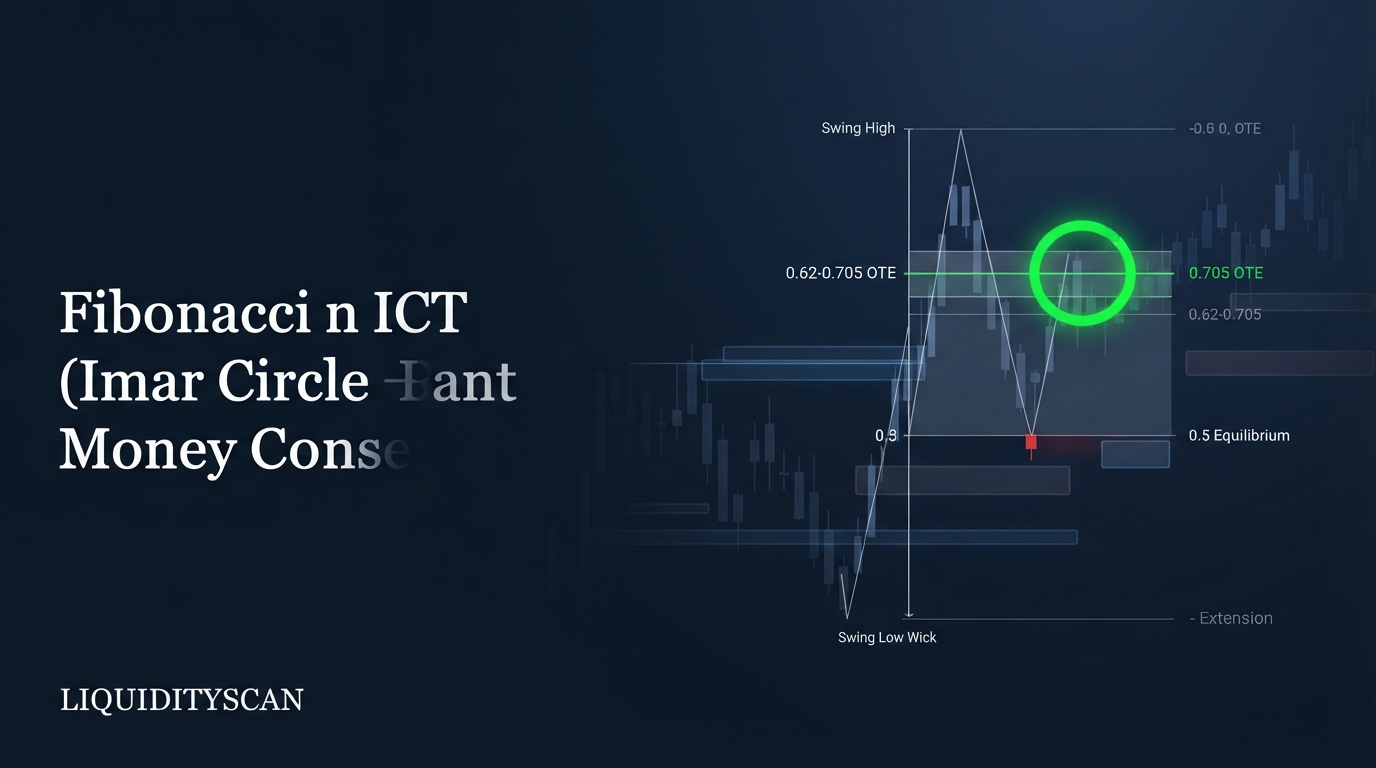
Fibonacci in ICT: Which Levels Actually Matter (and Why)
ICT strips Fibonacci down to a value proxy: anchor it swing low to swing high on the dealing range (wicks included), then trade around 0.5 equilibrium, the 0.62-0.705-0.79 OTE band, and negative extensions for targets. Every other level on the default retail fib is noise.
Hayk Muradian·
·11 min
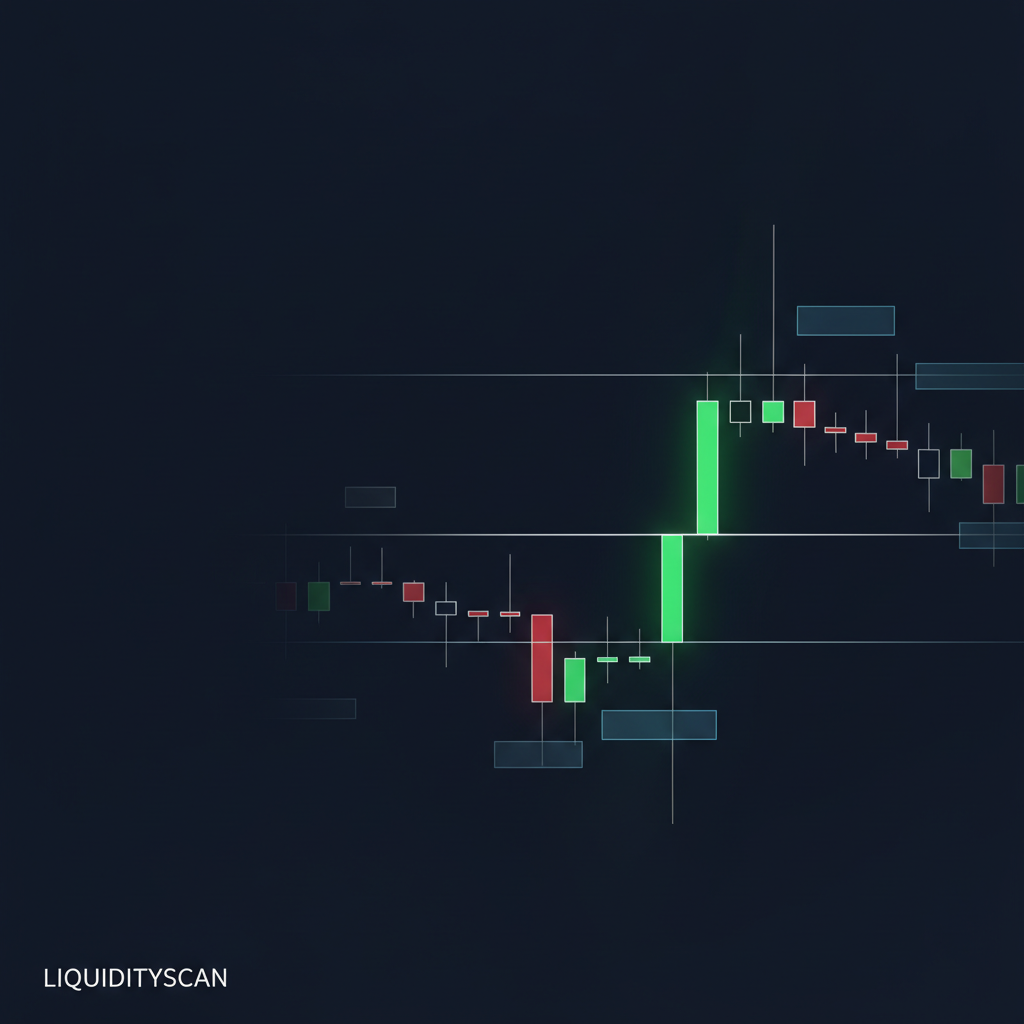
Displacement in ICT: Reading Institutional Intent
Displacement is the ICT footprint of institutional order flow: a fast, wide move that shifts structure and leaves a fair value gap behind it.
Hayk Muradian·
·4 min

IPDA in ICT: The Algorithm Behind Price Delivery
IPDA is ICT's shorthand for an algorithmic price-delivery engine that seeks liquidity and rebalances inefficiency across defined lookback ranges.
Hayk Muradian·
·5 min
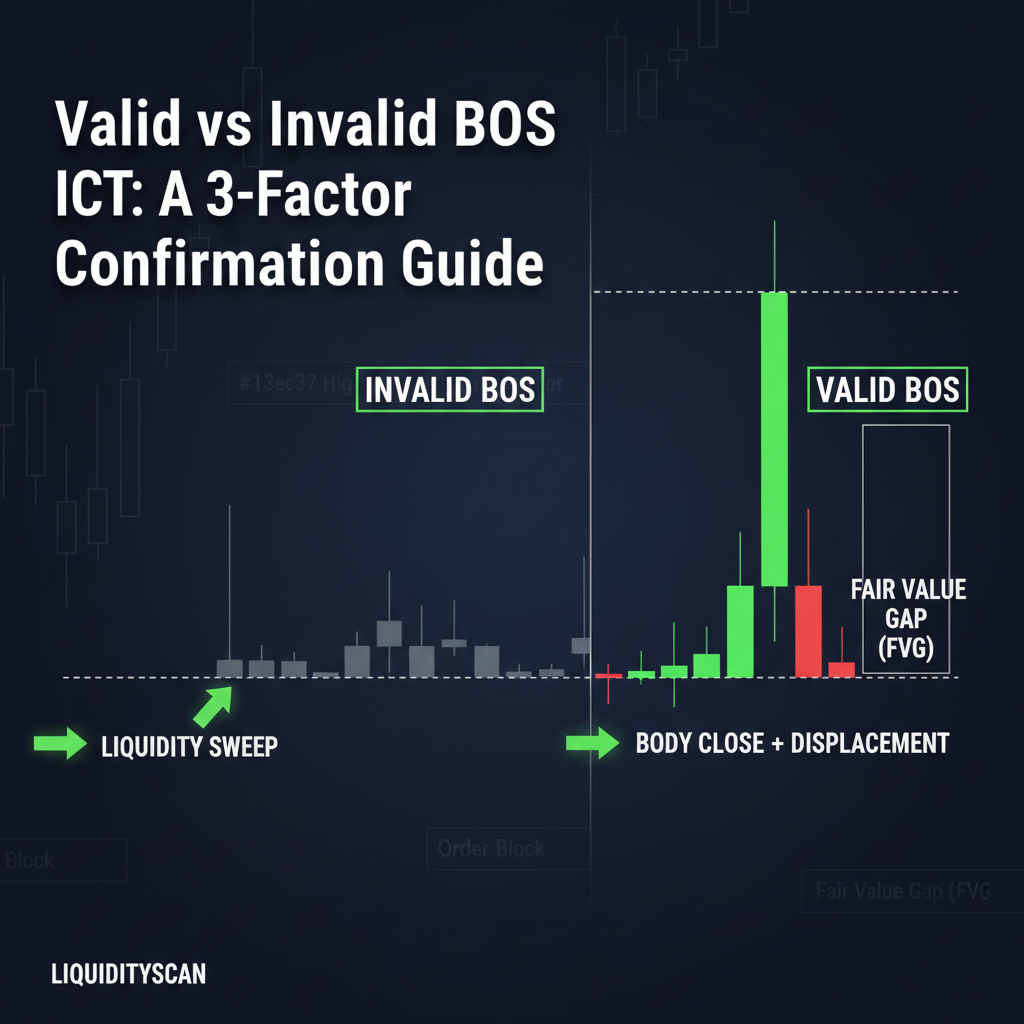
Valid vs Invalid BOS ICT: A 3-Factor Confirmation Guide
A valid Break of Structure (BOS) is confirmed by a candle body closing beyond a structural high or low with displacement. An invalid BOS is a wick-only sweep that fails to generate a subsequent Fair Value Gap.
Hayk Muradian·
·9 min

Change of Character (CHoCH): Spotting Early Reversals
A Change of Character is the first structural clue that institutional order flow is reversing. Here is how to identify it, separate it from a BOS, and trade it.
Hayk Muradian·
·5 min
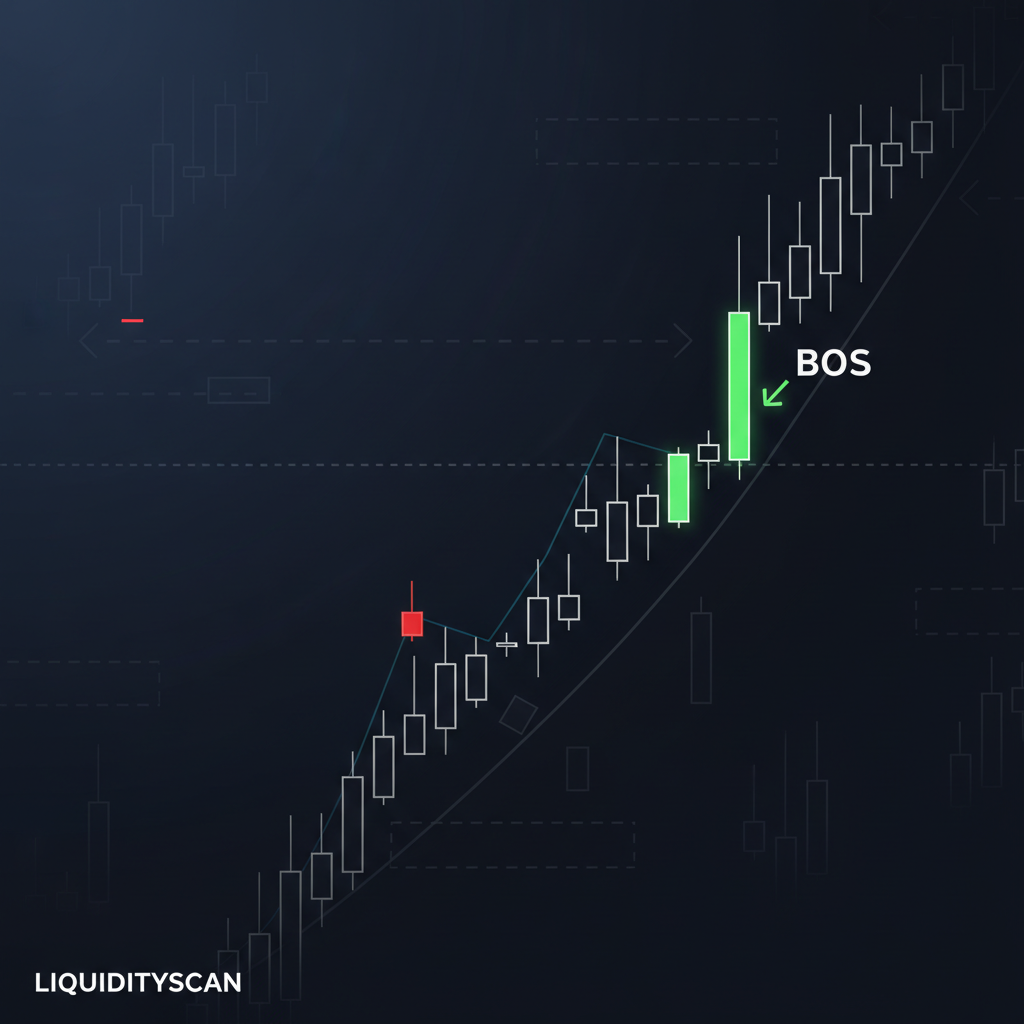
Stop Getting Faked Out: The Real Break of Structure (BOS)
A Break of Structure (BOS) is a core Smart Money Concept (SMC) that confirms the continuation of the current market trend. It occurs when price decisively breaks and closes with a full candle body beyond a prior structural point—a swing high in an uptrend or a swing low in a downtrend.
Hayk Muradian·
·6 min
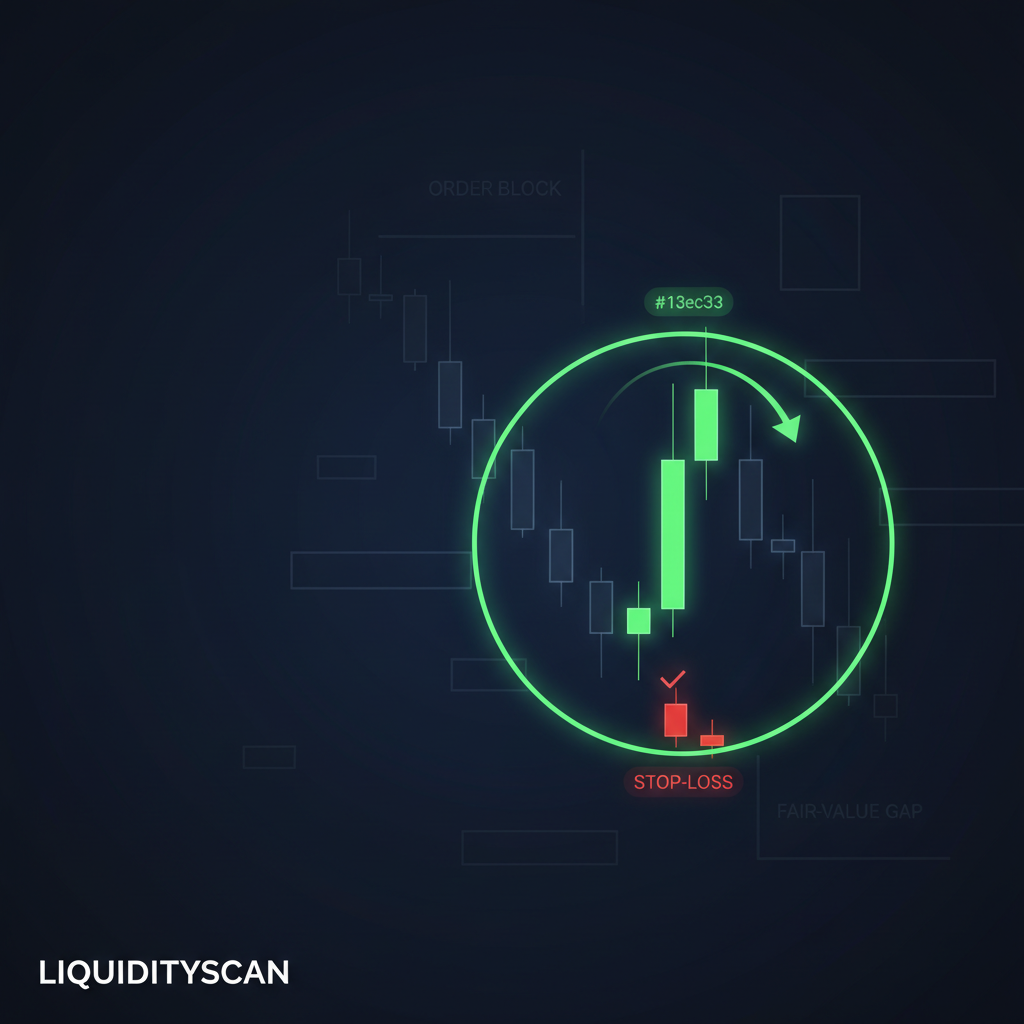
What Is CISD in ICT Trading? (Change in Delivery)
CISD — Change in State of Delivery — is the candle-close-confirmed flip in the direction price is being delivered. Here's how to spot a bullish or bearish CISD, grade it with displacement, and trade the shift after a liquidity sweep.
Hayk Muradian·
·12 min
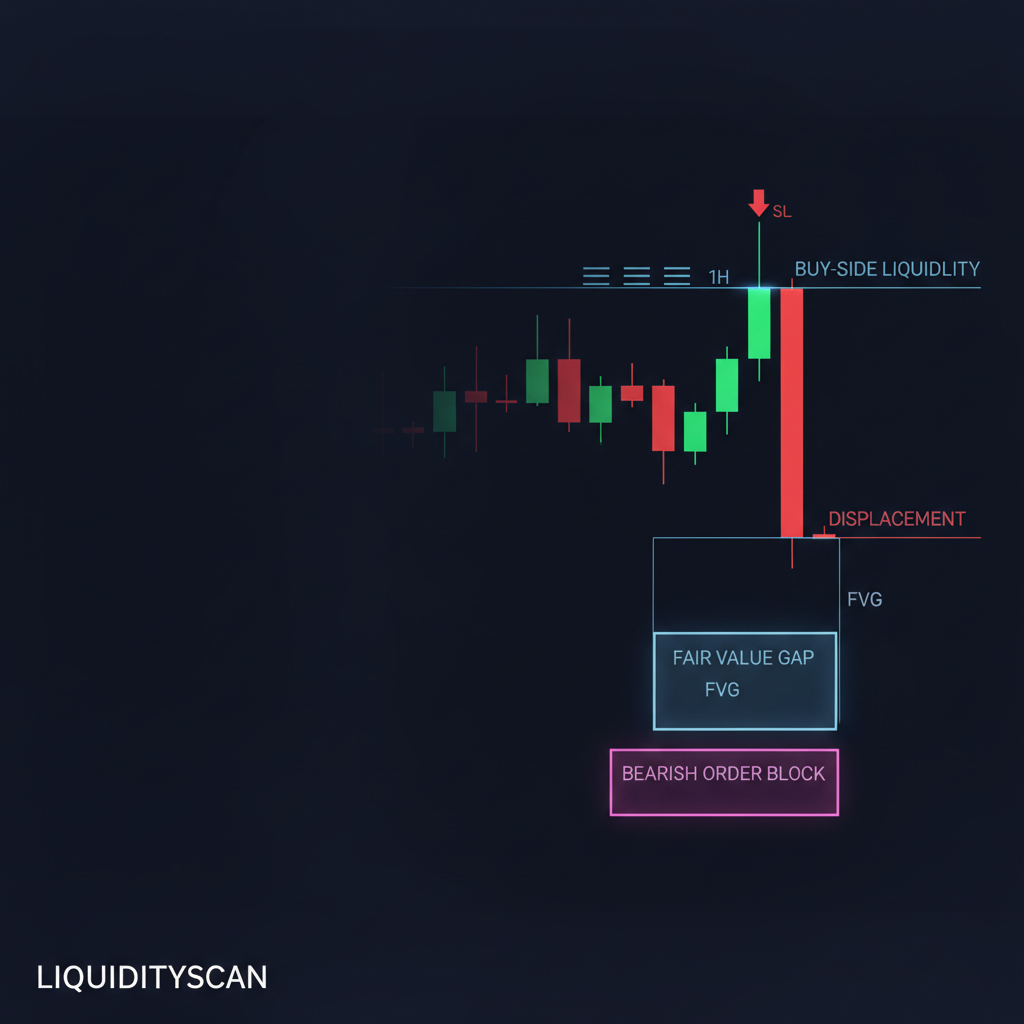
What Are Smart Money Concepts? A Trader's Guide to Order Flow
Smart Money Concepts (SMC) are not a strategy, but a paradigm for reading price. It's a framework built on the premise that markets are driven by institutional algorithms seeking liquidity.
Hayk Muradian·
·4 min
BOS vs. CHoCH: The Definitive Guide for SMC Traders
BOS vs. CHoCH: The Definitive Guide for SMC Traders
Hayk Muradian·
·5 min
What is SMT Divergence in ICT Trading?
What is SMT Divergence in ICT Trading?
Hayk Muradian·
·5 min
What Is Market Structure in ICT?
What Is Market Structure in ICT?
Hayk Muradian·
·4 min

The ICT Market Structure Framework: Complete Guide
Market structure is the foundation every ICT setup is built on. This is the complete framework for reading it the way institutions deliver price.
Hayk Muradian·
·13 min
Not trading advice. LiquidityScan publishes educational content for informational purposes only. Trading involves substantial risk of loss.